Select Question Set:

 Q. No.
2–Phenylcycloprop–2–en–1–one is allowed to react with phenylmagnesium bromide
and the reaction mixture is hydrolyzed with perchloric acid. The product formed is
1.

2.

3.

4.
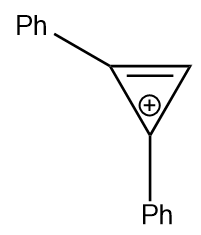
and the reaction mixture is hydrolyzed with perchloric acid. The product formed is

Subtopic: Aldehydes & Ketones: Preparation & Properties |
Level 3: 35%-60%
Hints


Subtopic: Aldehydes & Ketones: Preparation & Properties |
53%
Level 3: 35%-60%
Hints


Subtopic: Carboxylic Acids: Preparation & Properties |
50%
Level 3: 35%-60%
Hints


Subtopic: Carboxylic Acids: Preparation & Properties |
Level 3: 35%-60%
Hints
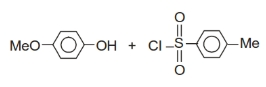


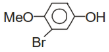


Subtopic: Aldehydes & Ketones: Preparation & Properties |
53%
Level 3: 35%-60%
Hints


Subtopic: Aldehydes & Ketones: Preparation & Properties |
50%
Level 3: 35%-60%
Hints
Why does the reaction produce stable salt?

Because
1. In 'A' the ring is aromatic
2. 6 p electrons are present
3. Ring in a is stabilized by closed-loop conjugation
4. All of these
Subtopic: Aldehydes & Ketones: Preparation & Properties |
90%
Level 1: 80%+
Hints


Subtopic: Aldehydes & Ketones: Preparation & Properties |
52%
Level 3: 35%-60%
Hints


Subtopic: Aldehydes & Ketones: Preparation & Properties |
Level 3: 35%-60%
Hints
Select Question Set:

© 2026 GoodEd Technologies Pvt. Ltd.