
The strongest acid among the following aromatic compounds is :
1.
p-Chlorophenol
2.
p-Nitrophenol
3.
m-Nitrophenol
4.
o- Nitrophenol


Which of the following reactions will give 2° chiral alcohol as one or more of major organic products?
| (1) |  |
| (2) |  |
| (3) |  |
| (4) | None |


An aromatic compound A (C8H10O) gives the following tests with the given reagents.

The structure of 'A' is:
| 1. |  |
2. |  |
| 3. |  |
4. |  |
Compounds I and II can be distinguished by using reagent:
(I) 4–Amino–2–methylbut–3–en–2–ol
(II) 4–Amino–2,2–dimethylbut–3–yn–1–ol
1. NaNO2/HCl
2. Br2/H2O
3. HCl/ZnCl2 (anhydrous)
4. Cu2Cl2 + NH4OH
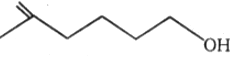
 W. Product W is:
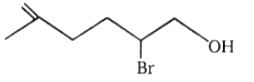

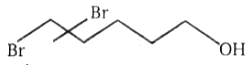

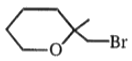

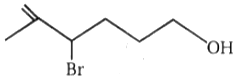


In each of the following groups, which is the strongest (best) nucleophile ?
(I)(1)H3C-O- (2)  (3)H3C-S- in CH3OH
(II)(1)OH- (2) H2O (3) in DMF
(III) (1)  (2)
 (3) CH3O- in DMSO
(a) I,3; II,3; III,2 (b) I,2; II,1; III,3
(c) I,1; II,2; III,1 (d) I,3; II,1; III,3


Which of the following statements is true?
1. CH3CH2S- is both a stronger base and more nucleophilic than CH3CH2O-
2. CH3CH2S- is a stronger base but is less nucleophilic than CH3CH2O-
3. CH3CH2S- is a weaker base but is more nucleophilic than CH3CH2O-
4. CH3CH2S- is both a weaker base and less nucleophilic than CH3CH2O-


Which of the following products will contain the oxygen-18 (¹⁸O) isotope in the given reaction?

1. H2O
2. Methyl benzoate
3. Both 1 and 2
4. Benzoic acid

© 2026 GoodEd Technologies Pvt. Ltd.