Select Question Set:

 Q. No.
The number of structural isomers possible from the molecular formula C3H9N are:
1.
Four (4)
2.
Five (5)
3.
Two (2)
4.
Three (3)


Subtopic: Amines - Preparation & Properties |
56%
Level 3: 35%-60%
NEET - 2015
Hints

Mark the reaction that does not yield aniline from the given options:
| 1. | Hydrolysis of phenyl isocyanide with an acidic solution |
| 2. | Degradation of benzamide with bromine in alkaline solution |
| 3. | Reduction of nitrobenzene with H2/Pd in ethanol |
| 4. | Treatment of potassium salt of phthalimide with chlorobenzene followed by hydrolysis in an aqueous NaOH solution |
Subtopic: Amines - Preparation & Properties |
66%
Level 2: 60%+
NEET - 2015
Hints
What results from the electrolytic reduction of nitrobenzene in a highly acidic medium?
1. p-Aminophenol
2. Azoxybenzene
3. Azobenzene
4. Aniline
Subtopic: Urea & Nitro Compound |
Level 3: 35%-60%
NEET - 2015
Hints




Subtopic: Diazonium Salts: Preparation, Properties & Uses |
86%
Level 1: 80%+
AIPMT - 2014
Hints
Links

Subtopic: Diazonium Salts: Preparation, Properties & Uses |
77%
Level 2: 60%+
AIPMT - 2013
Hints
Nitrobenzene on reaction with conc. HNO3 /H2SO4 at 80 – 100 ºC forms:
1. 1,3– Dinitrobenzene
2. 1,4–Dinitrobenzene
3. 1,2,4–Trinitrobenzene
4. 1,2–Dinitrobenzene
Subtopic: Urea & Nitro Compound |
57%
Level 3: 35%-60%
AIPMT - 2013
Hints



Unlock IMPORTANT QUESTION
This question was bookmarked by 5 NEET 2025 toppers during their NEETprep journey. Get Target Batch to see this question.
✨ Perfect for quick revision & accuracy boost
Buy Target Batch
Access all premium questions instantly


Subtopic: Urea & Nitro Compound |
Level 3: 35%-60%
AIPMT - 2011
Hints
Links
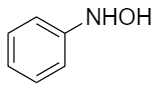
Aniline gives a set of the following reactions that yielded a coloured product 'Y':

The structure of 'Y' is :
| 1. |  |
| 2. |  |
| 3. |  |
| 4. |  |
Subtopic: Diazonium Salts: Preparation, Properties & Uses |
85%
Level 1: 80%+
AIPMT - 2010
Hints
What is the product formed in the below reaction?

| 1. |  |
2. |  |
| 3. |  |
4. |  |
Subtopic: Amines - Preparation & Properties |
56%
Level 3: 35%-60%
AIPMT - 2009
Hints
Links





Subtopic: Diazonium Salts: Preparation, Properties & Uses |
86%
Level 1: 80%+
AIPMT - 2008
Hints
Links
Select Question Set:

© 2026 GoodEd Technologies Pvt. Ltd.