
The strongest acid among the following aromatic compounds is -
| 1. | p-Chlorophenol | 2. | p-Nitrophenol |
| 3. | m-Nitrophenol | 4. | o- Nitrophenol |


Subtopic: Phenols: Preparation & Properties |
78%
Level 2: 60%+
Hints


Unlock IMPORTANT QUESTION
This question was bookmarked by 5 NEET 2025 toppers during their NEETprep journey. Get Target Batch to see this question.
✨ Perfect for quick revision & accuracy boost
Buy Target Batch
Access all premium questions instantly


Subtopic: Alcohols: Preparation & Properties |
58%
Level 3: 35%-60%
Hints
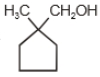 would be


Subtopic: Mechanism of Dehydration, Methanol & Ethanol |
63%
Level 2: 60%+
Hints


Unlock IMPORTANT QUESTION
This question was bookmarked by 5 NEET 2025 toppers during their NEETprep journey. Get Target Batch to see this question.
✨ Perfect for quick revision & accuracy boost
Buy Target Batch
Access all premium questions instantly
Which of the following reactions will give 2° chiral alcohol as one or more of major organic products?
| (1) |  |
| (2) |  |
| (3) |  |
| (4) | None |
Subtopic: Alcohols: Preparation & Properties |
Level 3: 35%-60%
Hints
Unlock IMPORTANT QUESTION
This question was bookmarked by 5 NEET 2025 toppers during their NEETprep journey. Get Target Batch to see this question.
✨ Perfect for quick revision & accuracy boost
Buy Target Batch
Access all premium questions instantly


Subtopic: Electrophilic Substitution Reactions, Uses of Phenols |
55%
Level 3: 35%-60%
Hints
Unlock IMPORTANT QUESTION
This question was bookmarked by 5 NEET 2025 toppers during their NEETprep journey. Get Target Batch to see this question.
✨ Perfect for quick revision & accuracy boost
Buy Target Batch
Access all premium questions instantly


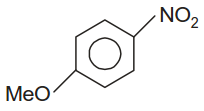


Subtopic: Ethers: Preparation & Properties, Uses |
79%
Level 2: 60%+
Hints


R-CH2-CH2OH can be converted into RCH2CH2COOH. The correct sequence of reagents is:
1. PBr3, KCN, H+
2. PBr3, KCN, H2
3. KCN, H+
4. HCN, PBr3, H+
Subtopic: Mechanism of Dehydration, Methanol & Ethanol |
71%
Level 2: 60%+
Hints
Unlock IMPORTANT QUESTION
This question was bookmarked by 5 NEET 2025 toppers during their NEETprep journey. Get Target Batch to see this question.
✨ Perfect for quick revision & accuracy boost
Buy Target Batch
Access all premium questions instantly

Subtopic: Ethers: Preparation & Properties, Uses |
65%
Level 2: 60%+
Hints
Links
Unlock IMPORTANT QUESTION
This question was bookmarked by 5 NEET 2025 toppers during their NEETprep journey. Get Target Batch to see this question.
✨ Perfect for quick revision & accuracy boost
Buy Target Batch
Access all premium questions instantly
Consider the following alcohols,
| I. |  |
| II. |  |
| III. |  |
| IV. |  |
Ease of dehydration of the above alcohols will be in the order of:
| 1. | I < II < III < IV | 2. | I > II > III > IV |
| 3. | III < II < I < IV | 4. | II < III < IV < I |
Subtopic: Mechanism of Dehydration, Methanol & Ethanol |
68%
Level 2: 60%+
Hints


Unlock IMPORTANT QUESTION
This question was bookmarked by 5 NEET 2025 toppers during their NEETprep journey. Get Target Batch to see this question.
✨ Perfect for quick revision & accuracy boost
Buy Target Batch
Access all premium questions instantly
The product 'D' in the below mentioned reaction is:
\(CH_3MgBr + \text{cyclopentanone}\ \)
\(\xrightarrow{H_2O}\ A\ \xrightarrow{HBr}\ B\)
\( B\ \xrightarrow{Mg/Ether}\ C \xrightarrow[H_3O^+]{HCHO}\ D\)
| 1. |  |
2. | 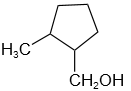 |
| 3. |  |
4. |  |
Subtopic: Alcohols: Preparation & Properties |
62%
Level 2: 60%+
Hints

© 2026 GoodEd Technologies Pvt. Ltd.