Which of the following compounds are optically active?

(i). 

(ii). 

(iii). 
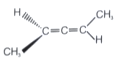
(iv). 
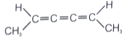
1. (i) & (ii)

2. (i) & (iii)

3. (ii) & (iii)

4. (i) & (iv)

Subtopic:  Isomerism & Chirality |
 61%
Level 2: 60%+
Hints

premium feature crown icon
Unlock IMPORTANT QUESTION
This question was bookmarked by 5 NEET 2025 toppers during their NEETprep journey. Get Target Batch to see this question.
✨ Perfect for quick revision & accuracy boost
Buy Target Batch
Access all premium questions instantly

NaI/AcetoneProduct

Which of the following is not a product of the above reaction?

1. 

2. 

3. 

4. 

Subtopic:  Mechanism of Reactions |
 52%
Level 3: 35%-60%
Hints

premium feature crown icon
Unlock IMPORTANT QUESTION
This question was bookmarked by 5 NEET 2025 toppers during their NEETprep journey. Get Target Batch to see this question.
✨ Perfect for quick revision & accuracy boost
Buy Target Batch
Access all premium questions instantly

Product A is

1. 


2. 

3. 

4. 

Subtopic:  Mechanism of Reactions |
 57%
Level 3: 35%-60%
Hints

advertisementadvertisement

premium feature crown icon
Unlock IMPORTANT QUESTION
This question was bookmarked by 5 NEET 2025 toppers during their NEETprep journey. Get Target Batch to see this question.
✨ Perfect for quick revision & accuracy boost
Buy Target Batch
Access all premium questions instantly

Which of the following compound would not give an E2 product when treated with sodium ethoxide?

1. 

2. 

3. 

4. 

Subtopic:  Mechanism of Reactions |
 61%
Level 2: 60%+
Hints

premium feature crown icon
Unlock IMPORTANT QUESTION
This question was bookmarked by 5 NEET 2025 toppers during their NEETprep journey. Get Target Batch to see this question.
✨ Perfect for quick revision & accuracy boost
Buy Target Batch
Access all premium questions instantly

In which reaction product formation does not take place by Hofmann's Rule?

1. CH3-CH2-CH-CH3t-BuOΘK
|
Br

2. CH3-CH2-CH-CH3C2H3OK
|
F

3. CH3-CH2-CH-CH3CH3O-K+
|
I

4. CH3-CH2-CH-N(CH3)3I-OH-
|
CH3
-


Subtopic:  Mechanism of Reactions |
 50%
Level 3: 35%-60%
Hints

premium feature crown icon
Unlock IMPORTANT QUESTION
This question was bookmarked by 5 NEET 2025 toppers during their NEETprep journey. Get Target Batch to see this question.
✨ Perfect for quick revision & accuracy boost
Buy Target Batch
Access all premium questions instantly

What would be the major product of the given reaction?


1.     

2.    

3.       

4.     

Subtopic:  Mechanism of Reactions |
 60%
Level 2: 60%+
Hints

advertisementadvertisement

In which of the following compounds, the C—Cl bond ionization shall give the most stable carbonium ion?

1. 
2. 
3. 
4. 
Subtopic:  Mechanism of Reactions |
 54%
Level 3: 35%-60%
NEET - 2015
Hints

Given the following reaction:

The structure of the major product is:

1.
2.
3.
4.

Subtopic:  Chemical Properties |
 51%
Level 3: 35%-60%
Hints

premium feature crown icon
Unlock IMPORTANT QUESTION
This question was bookmarked by 5 NEET 2025 toppers during their NEETprep journey. Get Target Batch to see this question.
✨ Perfect for quick revision & accuracy boost
Buy Target Batch
Access all premium questions instantly

Which of the following alkyl halides has the maximum density?

1. \(\mathrm{C}_3 \mathrm{H}_7 \mathrm{I} \) 2. \(\mathrm{C}_2 \mathrm{H}_5 \mathrm{I} \)
3. \(\mathrm{CH}_3 \mathrm{I} \) 4. \(\mathrm{CH}_3 \mathrm{Br}\)
Subtopic:  Introduction and Physical Properties |
Level 4: Below 35%
Hints

advertisementadvertisement

premium feature crown icon
Unlock IMPORTANT QUESTION
This question was bookmarked by 5 NEET 2025 toppers during their NEETprep journey. Get Target Batch to see this question.
✨ Perfect for quick revision & accuracy boost
Buy Target Batch
Access all premium questions instantly

PCI5 reacts with propanone to give:

1. gem-Dichloride

2. vic-Dichloride

3. Propanal

4. Propane chloride

Subtopic:  Introduction and Physical Properties |
 58%
Level 3: 35%-60%
Hints

