
The conversion of cyclohexanol into cyclohexene is most effective with
1. Concentrated H3PO4
2. Concentrated HCl
3. Concentrated HCl / ZnCl2
4. Concentrated HBr


Mark the reaction among the following that does not give benzoic acid as the major product:
| 1. |  |
| 2. |  |
| 3. |  |
| 4. |  |
Which of the following is produced when the vapours of secondary alcohol are passed over heated copper at 573 K?
| 1. | A carboxylic acid | 2. | An aldehyde |
| 3. | A ketone | 4. | An alkene |


The major products C and D formed in the following reaction respectively are:
\(CH_3CH_2CH_2OC{(CH_3)}_3 \xrightarrow[\Delta]{\text{Excess}\ HI}\ C + D\)
1. H3C-CH2-CH2-I and I-C(CH3)3
2. H3C-CH2-CH2-OH and I-C(CH3)3
3. H3C-CH2-CH2-I and HO-C(CH3)3
4. H3C-CH2-CH2-OH and HO-C(CH3)3


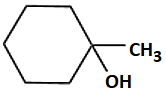


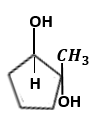



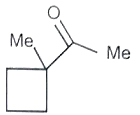
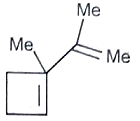
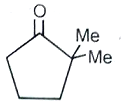
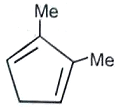
Two isomers, I and II, are being heated with HBr, then the products obtained are:
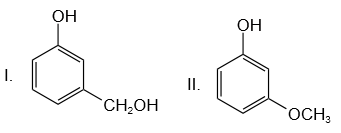
Choose the correct option:
| 1. | 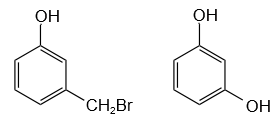 |
| 2. | 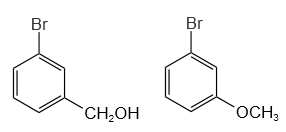 |
| 3. | 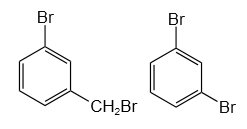 |
| 4. | 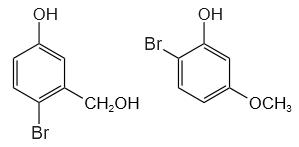 |
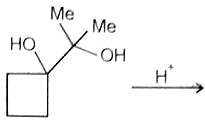


Phenol on treatment with dilute HNO3 gives two products P and Q. P is steam volatile but Q is not. P and Q are, respectively:
| 1. |  |
| 2. |  |
| 3. |  |
| 4. |  |

© 2026 GoodEd Technologies Pvt. Ltd.