
Which of the following will give yellow precipitate with I2/NaOH?
| 1. | CH3-CO-O-CO-CH3 | 2. |  |
| 3. |  |
4. | Both (2) and (3) |


An organic compound X on treatment with acidified K2Cr2O7, gives compound Y which reacts with I2, and NaOH to form CHI3. The compound X can be-
1. CH3OH
2. CH3CHO
3. CH3COCH3
4. CH3CH(OH)CH3


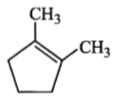
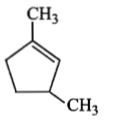
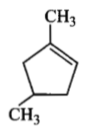
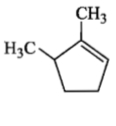
CH3CH=CHCHO is oxidized to CH3CH=CHCOOH using:
1. Alkaline permanganate
2. Ammoniacal silver nitrate
3. Selenium dioxide
4. Osmium tetroxide



Acetylene and HCHO react in the presence of copper acetylide catalyst to form:
(1) 2-Butyne-1,4-diol
(2) 1-Butyne-1,4-diol
(3) 2-Butyne-1,2-diol
(4) None of these
An organic compound X having molecular formula C5H10O yields phenyl hydrazone and
gives negative response to the iodoform test and Tollen's test. It produces n-pentane on
reduction. X could be:
1. Pentenal
2. 2-Pentanone
3. 3-Pentanone
4. n-Amyl alcohol


CH3CHO and C6H5CH2CHO can be distinguished chemically by:
1. Benedict test
2. Iodoform test
3. Tollen's reagent test
4. Fehling solution test

© 2026 GoodEd Technologies Pvt. Ltd.