Select Chapter Topics:

 Q. No.
When  is reduced with Sn / HCl, the pair of products formed is :
1. Ethanol, hydroxylamine hydrochloride
2. Ethanol, ammonium hydroxide
3. Ethanol, NH2OH
4. \(C_3H_5NH_2, H_2O\)
is reduced with Sn / HCl, the pair of products formed is :2. Ethanol, ammonium hydroxide
3. Ethanol, NH2OH
4. \(C_3H_5NH_2, H_2O\)


Subtopic: Urea & Nitro Compound |
To view explanation, please take trial in the course.
NEET 2026 - Target Batch - Vital
Hints

Whose melting point is the highest?
| 1. | Primary amines | 2. | Secondary amines |
| 3. | Tertiary amines | 4. | Quaternary amines |
Subtopic: Amines - Preparation & Properties |
69%
From NCERT
To view explanation, please take trial in the course.
NEET 2026 - Target Batch - Vital
Hints
To view explanation, please take trial in the course.
NEET 2026 - Target Batch - Vital
Subtopic: Urea & Nitro Compound |
61%
To view explanation, please take trial in the course.
NEET 2026 - Target Batch - Vital
Hints
Links
To view explanation, please take trial in the course.
NEET 2026 - Target Batch - Vital


Which of the following amines doesn't give the carbylamine reaction?
| 1. | Ethylamine | 2. | Dimethylamine |
| 3. | Methylamine | 4. | Phenylamine |
Subtopic: Identification of Primary, Secondary & Tertiary Amines |
81%
From NCERT
To view explanation, please take trial in the course.
NEET 2026 - Target Batch - Vital
Hints
Links
To view explanation, please take trial in the course.
NEET 2026 - Target Batch - Vital
Which of the following is most reactive to electrophilic substitution?
| 1. | Nitrobenzene | 2. | Aniline |
| 3. | Aniline hydrochloric | 4. | n-Acetylaniline |
Subtopic: Amines - Preparation & Properties |
57%
From NCERT
To view explanation, please take trial in the course.
NEET 2026 - Target Batch - Vital
Hints
To view explanation, please take trial in the course.
NEET 2026 - Target Batch - Vital
Cyanoform is a _____ acid than chloroform.
1. Weaker
2. Neutral
3. Stronger
4. Both acidic and basic
Subtopic: Cyanides & Isocyanides |
61%
To view explanation, please take trial in the course.
NEET 2026 - Target Batch - Vital
Hints


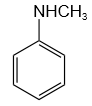


Subtopic: Identification of Primary, Secondary & Tertiary Amines |
86%
From NCERT
NEET - 2020
To view explanation, please take trial in the course.
NEET 2026 - Target Batch - Vital
Hints
Links
To view explanation, please take trial in the course.
NEET 2026 - Target Batch - Vital
The following reaction is the best method to introduce F to benzene:
The structure of intermediate compound A is:

| 1. |  |
2. |  |
| 3. |  |
4. |  |
Subtopic: Diazonium Salts: Preparation, Properties & Uses |
84%
From NCERT
To view explanation, please take trial in the course.
NEET 2026 - Target Batch - Vital
Hints
To view explanation, please take trial in the course.
NEET 2026 - Target Batch - Vital


Subtopic: Urea & Nitro Compound |
64%
From NCERT
To view explanation, please take trial in the course.
NEET 2026 - Target Batch - Vital
Hints
To view explanation, please take trial in the course.
NEET 2026 - Target Batch - Vital
Select the correct option based on the statements below:
| Assertion (A): |  is more basic than is more basic than . . |
| Reason (R): | Delocalization of a lone pair of electrons decreases the basic strength. |
| 1. | Both (A) and (R) are True and (R) is not the correct explanation of (A). |
| 2. | (A) is True but (R) is False. |
| 3. | Both (A) and (R) are True but (R) is the correct explanation of (A). |
| 4. | Both (A) and (R) are False. |
Subtopic: Amines - Preparation & Properties |
59%
From NCERT
To view explanation, please take trial in the course.
NEET 2026 - Target Batch - Vital
Hints
Links
To view explanation, please take trial in the course.
NEET 2026 - Target Batch - Vital
Select Chapter Topics:

© 2025 GoodEd Technologies Pvt. Ltd.