Select Question Set:

 Q. No.
The strongest acid among the following aromatic compounds is :
1.
p-Chlorophenol
2.
p-Nitrophenol
3.
m-Nitrophenol
4.
o- Nitrophenol

Subtopic: Phenols: Preparation & Properties |
78%
Level 2: 60%+
Hints


Subtopic: Alcohols: Preparation & Properties |
58%
Level 3: 35%-60%
Hints
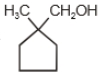 would be


Subtopic: Mechanism of Dehydration, Methanol & Ethanol |
63%
Level 2: 60%+
Hints


Which of the following reactions will give 2° chiral alcohol as one or more of major organic products?
| (1) |  |
| (2) |  |
| (3) |  |
| (4) | None |
Subtopic: Alcohols: Preparation & Properties |
Level 3: 35%-60%
Hints


Subtopic: Electrophilic Substitution Reactions, Uses of Phenols |
55%
Level 3: 35%-60%
Hints


Subtopic: Ethers: Preparation & Properties, Uses |
79%
Level 2: 60%+
Hints


An aromatic compound A (C8H10O) gives the following tests with the given reagents.

The structure of 'A' is:
| 1. |  |
2. |  |
| 3. |  |
4. |  |
Subtopic: Alcohols: Preparation & Properties |
66%
Level 2: 60%+
Hints
Links
Compound Y, C7H8O is insoluble in water, dil HCI and aqueous NaHCO3. It dissolves in dilute NaOH. When Y is treated with bromine water it is converted rapidly into a compound of formula C7H5OBr3. The structure of Y is:
| 1. |  |
2. |  |
| 3. |  |
4. |  |
Subtopic: Phenols: Preparation & Properties |
Level 3: 35%-60%
Hints
Compounds I and II can be distinguished by using reagent:
(I) 4–Amino–2–methylbut–3–en–2–ol
(II) 4–Amino–2,2–dimethylbut–3–yn–1–ol
1. NaNO2/HCl
2. Br2/H2O
3. HCl/ZnCl2 (anhydrous)
4. Cu2Cl2 + NH4OH
Subtopic: Alcohols: Preparation & Properties |
69%
Level 2: 60%+
Hints
Links


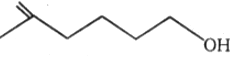
 W. Product W is:
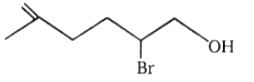

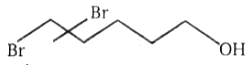

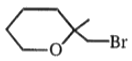

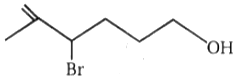

Subtopic: Mechanism of Dehydration, Methanol & Ethanol |
58%
Level 3: 35%-60%
Hints
Select Question Set:

© 2026 GoodEd Technologies Pvt. Ltd.