
 Q. No.
Identify the incorrectly matched pair:
| Animals | Feature present in both | |
| 1. | Balanoglossus and Pinctada | Open circulatory system |
| 2. | Branchiostoma and Ascidia | Persistent notochord |
| 3. | Aplysia and Pheretima | True coelom |
| 4. | Gorgonia and Pennatula | Cnidoblasts |


Pteropus is a/an:
| 1. | Limbless amphibian |
| 2. | Extinct reptile that evolved into mammals |
| 3. | Bony fish that migrates from sea water to fresh water for breeding |
| 4. | Mammal with flight |


Which of the following is not an arthropod characteristic?
1. Jointed appendages
2. Non-segmented bodies
3. Periodic moulting
4. Articulated exoskeleton
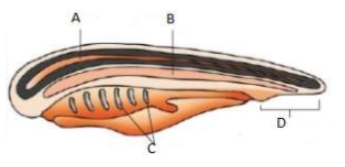
The structure shown in the given diagram is characteristically seen in the Phylum:
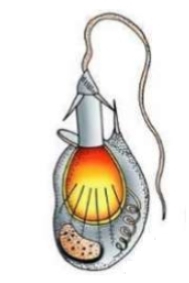
1. Porifera
2. Ctenophora
3. Cnidaria
4. Molluska
An animal with the following body wall organization will not have:

1. Cephalization
2. Three germ layers
3. Bilateral symmetry
4. A complete digestive tract
Consider the following statements:
I. Platyhelminths are acoelomates and use protonephridia as excretory structures.
II. Aschelminthes are pseudocoelomates and have bilateral symmetry.
III. Adult echinoderms show radial symmetny and exhibit deuterostome type embryonic development.
Which of the above statements are true?
1. I and II only
2. I and III only
3. II and III only
4. I, II and III
Consider the following statements:
Chordates-
I. Possess a solid, single and ventral nerve cord
II. Have pharyngeal gill slits at some point during their development.
III. Have post-anal tail
Which of the above statements are true?
1 I and II only
2. I and III only
3. II and III only
4. I, II and III
Match each item in Column I with one item in Column Il and chose your answer from the codes given below:
Column I Column II
(animal) (phylum)
I. Loligo 1. Mollusca
II. Ophiura 2. Echinodermata
III. Beroe 3. Cnidaria
IV. Adamsia 4. Ctenophora
Codes:
I II III IV
1. 1 2 3 4
2. 2 1 4 3
3. 2 1 3 4
4. 1 2 4 3

© 2024 GoodEd Technologies Pvt. Ltd.