Select Chapter Topics:

 Q. No.


Subtopic: Electron Displacement Effects | Reaction Intermediates ; Preparation & Properties |
95%
From NCERT
AIPMT - 2005
To view explanation, please take trial in the course.
NEET 2023 - Target Batch - Aryan Raj Singh
Hints
To view explanation, please take trial in the course.
NEET 2023 - Target Batch - Aryan Raj Singh


Please attempt this question first.
Hints
The chiral centre is absent in:
1. DCH2-CH2-CH2-Cl
2. CH3-CHD-CH2-Cl
3. CH3-CHCl-CH2D
4. CH3-CHOH-CH2-CH3


Subtopic: Stereo Isomers |
80%
From NCERT
AIPMT - 1998
To view explanation, please take trial in the course.
NEET 2023 - Target Batch - Aryan Raj Singh
Hints
To view explanation, please take trial in the course.
NEET 2023 - Target Batch - Aryan Raj Singh


Which one of the following compounds is most acidic:
| 1. |  |
2. |  |
| 3. |  |
4. | \(\mathrm{Cl}-\mathrm{CH}_2-\mathrm{CH}_2-\mathrm{OH}\) |
Subtopic: Acidic & Basic Character |
86%
From NCERT
AIPMT - 2005
To view explanation, please take trial in the course.
NEET 2023 - Target Batch - Aryan Raj Singh
Hints
To view explanation, please take trial in the course.
NEET 2023 - Target Batch - Aryan Raj Singh
IUPAC name of some compounds is given. The incorrect name is:
| 1. |  : 3-Methyl-4-ethylheptane : 3-Methyl-4-ethylheptane |
| 2. |  : 3-Methyl-2-butanol : 3-Methyl-2-butanol |
| 3. |  : 2-Ethyl-3-methylbut-1-ene : 2-Ethyl-3-methylbut-1-ene |
| 4. | \(\mathrm{CH}_3-\mathrm{C} \equiv \mathrm{C}-\mathrm{CH}\left(\mathrm{CH}_3\right)_2 \): 4-Methyl-2-pentyne |
Subtopic: Nomenclature |
55%
From NCERT
AIPMT - 2005
To view explanation, please take trial in the course.
NEET 2023 - Target Batch - Aryan Raj Singh
Hints
To view explanation, please take trial in the course.
NEET 2023 - Target Batch - Aryan Raj Singh
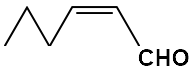


Subtopic: Nomenclature |
82%
From NCERT
AIPMT - 1999
To view explanation, please take trial in the course.
NEET 2023 - Target Batch - Aryan Raj Singh
Hints
To view explanation, please take trial in the course.
NEET 2023 - Target Batch - Aryan Raj Singh
The chiral compound among the following is:
| 1. | 2-Methylpentanoic acid | 2. | Pentanoic acid |
| 3. | 4-Methyl pentanoic acid | 4. | None of the above |
Subtopic: Stereo Isomers |
71%
From NCERT
AIPMT - 1999
To view explanation, please take trial in the course.
NEET 2023 - Target Batch - Aryan Raj Singh
Hints
Links
To view explanation, please take trial in the course.
NEET 2023 - Target Batch - Aryan Raj Singh
Subtopic: Stereo Isomers |
From NCERT
AIPMT - 2004
To view explanation, please take trial in the course.
NEET 2023 - Target Batch - Aryan Raj Singh
Hints
To view explanation, please take trial in the course.
NEET 2023 - Target Batch - Aryan Raj Singh
Subtopic: Nucleophile & Electrophile |
From NCERT
AIPMT - 2004
To view explanation, please take trial in the course.
NEET 2023 - Target Batch - Aryan Raj Singh
Hints
To view explanation, please take trial in the course.
NEET 2023 - Target Batch - Aryan Raj Singh
R and S enantiomers differ in:
1. Chemical properties
2. Solubility in achiral solvent
3. Rotation of plane polarised light.
4. Dipole moment
Subtopic: Conformational Isomers |
82%
From NCERT
AIPMT - 2000
To view explanation, please take trial in the course.
NEET 2023 - Target Batch - Aryan Raj Singh
Hints
To view explanation, please take trial in the course.
NEET 2023 - Target Batch - Aryan Raj Singh
Select Chapter Topics:

© 2024 GoodEd Technologies Pvt. Ltd.