
 Q. No.
Match the columns A and B:
Column I
Column II
(a)
Marginal placentation
(i)
Marigold
(b)
Axile placentation
(ii)
Dianthus
(c)
Parietal placentation
(iii)
Argemone
(d)
Free central placentation
(iv)
Chinarose
(e)
Basal placentation
(v)
Pea
(a)
(b)
(c)
(d)
(e)
1.
(v)
(iv)
(iii)
(ii)
(i)
2.
(v)
(iii)
(iv)
(i)
(ii)
3.
(iv)
(iii)
(v)
(ii)
(i)
4.
(i)
(v)
(iv)
(iii)
(ii)


An inferior ovary:
| 1. | is situated on the receptacle above the perianth and androecium. |
| 2. | is positioned below the sites of attachment for perianth and androecium. |
| 3. | forms a hypanthium. |
| 4. | is positioned below the receptacle. |
The floral diagram shown in the given diagram can be of :
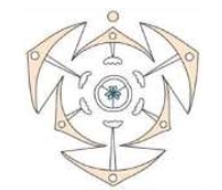
1. A plant that produces a chemical that can disrupt miotic spindle
2. Deadly night shade
3. Indigofera plant, a source of dye
4. A pulse plant


The floral diagram shown in the given diagram can be of:
1. A plant that produces a chemical that can disrupt mitotic spindle
2. Deadly night shade
3. Indigofera plant, a source of dye
4. A pulse plant

The condition of the ovary shown in the given diagram can be described as:
1. Perigynous
2. Epigynous
3. Superior
4. Inferior




Consider the following statements:
| I: | The roots hair are unicellular and arise from the region of maturation. |
| II: | Terminal buds of stems may get modified to thorns. |
| III: | Leaves originate from shoot apical meristem and are arranged in an acropetal order. |
Which of the above statements are true?
1. I and II only
2. I and III only
3. II and III only
4. I, II and III
Consider the following statements:
| I: | Whorled phyllotaxy is seen in Alstonia. |
| II: | Flowers of mustard, datura and chilli are actinomorphic. |
| III: | The ovary in plum, peach and rose is epigynous. |
Which of the above statements are true?
| 1. | I and II only | 2. | I and III only |
| 3. | II and III only | 4. | I, II and III |
Consider the following statements:
| I: | Imbricate aestivation is seen in Cassia and gulmohar. |
| II: | In Dianthus and Primrose, placentation is free central. |
| III: | Seeds of pea, gram and bean are non-endospermous. |
Which of the above statements are true?
| 1. | I and II only | 2. | I and III only |
| 3. | II and III only | 4. | I, II and III |


Match each item in Column I with one item in Column II and chose your answer from the codes given below:
| Column I (Flower) | Column II (Position of the Ovary) |
| I. Sunflower | 1. Epigynous |
| II. Mustard | 2. Hypogynous |
| III. Plum | 3. Perigynous |
Codes:
| I | II | III | |
| 1. | 1 | 2 | 3 |
| 2. | 2 | 3 | 1 |
| 3. | 2 | 1 | 3 |
| 4. | 3 | 2 | 1 |

© 2025 GoodEd Technologies Pvt. Ltd.