
 Q. No.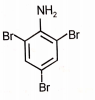



1. Gabriel phthalimide synthesis.
2. Wurtz's reaction.
3. Hofmann's method.
4. Hinsberg's method.



Match the structures in Column-I with their corresponding names in Column-II:
| Column-I (Structure) | Column-II (Name) | ||
| A. |  |
I. | Benzene-1,2-diamine |
| B. |  |
II. | Propane-1,2-diamine |
| C. |  |
III. | Prop-2-en-1-amine |
| D. |  |
IV. | N, N-Dimethylaniline |
Select the correct option:
1. (A) → (II), (B) → (IV), (C) → (I), (D) → (III)
2. (A) → (I), (B) → (II), (C) → (III), (D) → (IV)
3. (A) → (IV), (B) → (III), (C) → (I), (D) → (II)
4. (A) → (IV), (B) → (III), (C) → (II), (D) → (I)
Reduction of aromatic nitro compounds using Fe and HCl gives:
1. Aromatic oxime
2. Aromatic hydrocarbon
3. Aniline
4. Aromatic amide
| Assertion (A): | Reduction of nitrobenzene using Fe and HCl is preferred over Sn and HCl. |
| Reason (R): | With Fe, only a small amount of HCl is required to initiate the reaction, as FeCl2 formed gets hydrolyzed to release hydrochloric acid. |
| 1. | Both (A) and (R) are True and (R) is the correct explanation of (A). |
| 2. | Both (A) and (R) are True but (R) is not the correct explanation of (A). |
| 3. | (A) is True but (R) is False. |
| 4. | Both (A) and (R) are False. |


The X and A in the following reaction is:
CH3–CH2–Cl + Ethanolic NaCN→ X \(\xrightarrow[]{A}\) CH3–CH2–CH2–NH2
1. X = CH3CH2CN; A = LiAlH4
2. X = CH3CH2NC; A = KMnO4
3. X = CH3CH2CN; A = CrO3
4. X = CH3CH2NC; A = LiAlH4
Which chemical reaction leads to the formation of isocyanide?
1. Reimer Tiemann reaction.
2. Carbylamine reaction.
3. Hoffmann bromamide reaction.
4. None of the above.


| 1. | Arylamines are generally more basic than alkylamines because the nitrogen lone-pair electrons are not delocalized by interaction with the aromatic ring -electron system. |
| 2. | Arylamines are generally more basic than alkylamines because of aryl group. |
| 3. | Arylamines are generally more basic than alkylamines because the nitrogen atom in arylamines is sp-hybridized. |
| 4. | Arylamines are generally less basic than alkylamines because the nitrogen lone-pair electrons are delocalized by interaction with the aromatic ring -electron system. |

© 2026 GoodEd Technologies Pvt. Ltd.