Select Chapter Topics:

 Q. No.
In which of the following energy is released?
1.
Conversion of glucose into pyruvate
2.
Formation of proteins from amino acids
3.
Conversion of glucose into lactic acid
4.
Both (1) & (3)


Subtopic: The DNA |
83%
Level 1: 80%+
Hints

Which of the following is not strictly a biomacromoles?
1. Proteins
2. Lipids
3. Polysaccharides
4. Nucleic acid
Subtopic: Element Analysis | Introduction |
93%
Level 1: 80%+
Hints
Links
Subtopic: Element Analysis |
81%
Level 1: 80%+
Hints
Links


Zwitterions are ionized species of
1. Acidic amino acids
2. Basic amino acids
3. Neutral amino acids
4. All of these
Subtopic: Amino Acids |
64%
Level 2: 60%+
Hints
Links
Non-essential amino acids
1. Must be obtained from
2. Are synthesized in our body
3. Are not needed in our diet
4. Both (2) & (3)
Subtopic: Amino Acids |
77%
Level 2: 60%+
Hints
Links
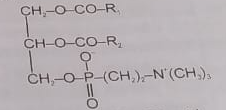
Subtopic: Lipids |
86%
Level 1: 80%+
Hints
Links


Subtopic: Lipids |
64%
Level 2: 60%+
Hints
Links
Subtopic: Introduction to Proteins |
94%
Level 1: 80%+
Hints
Subtopic: Introduction to Proteins |
86%
Level 1: 80%+
Hints
Links


Plant cell walls are made of
| 1. | Homopolymer of fructose |
| 2. | Heteropolymer of glycogen |
| 3. | Homopolymer of glucose |
| 4. | Homopolymer of glycogen |
Subtopic: Carbohydrates: Starch & Glycogen |
80%
Level 1: 80%+
Hints
Links
Select Chapter Topics:

© 2026 GoodEd Technologies Pvt. Ltd.