
 Q. No.
A few reactions are given below:
i.
\(\small{\mathrm{CH}_3 \mathrm{CH}_2 \mathrm{CH}_2 \mathrm{Br}+\mathrm{KOH} \rightarrow \mathrm{CH}_3 \mathrm{CH}=\mathrm{CH}_2+\mathrm{KBr}+\mathrm{H}_2 \mathrm{O}}\)
ii.

iii.

Select the reaction type for the above reactions:
(i)
(ii)
(iii)
1.
Elimination
Substitution
Addition
2.
Elimination
Substitution
Substitution
3.
Substitution
Addition
Addition
4.
Elimination
Elimination
Addition
| (i) | (ii) | (iii) | |
| 1. | Elimination | Substitution | Addition |
| 2. | Elimination | Substitution | Substitution |
| 3. | Substitution | Addition | Addition |
| 4. | Elimination | Elimination | Addition |


When hydrolyzed with aqueous KOH, compounds that undergoes racemization are:
| (i) |  |
(ii) | CH3CH2CH2Cl |
| (iii) |  |
(iv) |  |
| 1. | (i) and (ii) | 2. | (ii) and (iv) |
| 3. | (iv) only | 4. | (i) and (iv) |


The end product (C) in the below-mentioned reaction is:
\(H_3C-Br\xrightarrow{\bf KCN }A\xrightarrow{ \bf H_3O^+~~}B\xrightarrow[\bf\text{Ether}]{~~LiAlH_4~~}C\)
1. Acetone
2. Methane
3. Acetaldehyde
4. Ethyl alcohol
The correct order of increasing C-X bond reactivity toward nucleophiles among the following is:
| I |  |
II |  |
| III | \(\left(\mathrm{CH}_3\right)_3 \mathrm{C}-\mathrm{X}\) | IV | \(\left(\mathrm{CH}_3\right)_2 \mathrm{CH}-\mathrm{X}\) |
| 1. | I < II < IV < III | 2. | II < III < I < IV |
| 3. | IV < III < I < II | 4. | III < II < I < IV |
Which of the following reactions cannot form new carbon-carbon bonds?
1. Reimer-Tiemann reaction
2. Cannizaro reaction
3. Wurtz reaction
4. Friedel-Crafts acylation


Which compound in each of the following pairs will react faster in an \(S_N 2\) reaction with the −OH group?
(i) \(\mathrm{CH}_3 \mathrm{Br}\) or \(\mathrm{CH}_3 \mathrm{I}\)
(ii) \(\left(\mathrm{CH}_3\right)_3 \mathrm{CCl}\) or \(\mathrm{CH}_3 \mathrm{Cl}\)
Mark the correct option:
1. (i) \(\mathrm{CH}_3 \mathrm{Br}\) and (ii) \(\left(\mathrm{CH}_3\right)_3 \mathrm{CCl}\)
2. (i) \(\mathrm{CH}_3 \mathrm{I}\) and (ii) \(\mathrm{CH}_3 \mathrm{Cl}\)
3. (i) \(\mathrm{CH}_3 \mathrm{Br}\) and (ii) \(\mathrm{CH}_3 \mathrm{Cl}\)
4. (i)\(\mathrm{CH}_3 \mathrm{I}\)and (ii) \(\left(\mathrm{CH}_3\right)_3 \mathrm{CCl}\)


Which of the following compounds are optically active?
(i). 
(ii). 
(iii). 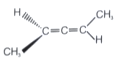
(iv). 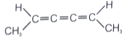
1. (i) & (ii)
2. (i) & (iii)
3. (ii) & (iii)
4. (i) & (iv)

© 2026 GoodEd Technologies Pvt. Ltd.