
Ph-CH=CH-COOH
The IUPAC name is:
1. 3-Phenyl prop-2-enoic acid
2. 3-Phenol prop-1-enoic acid
3. 3-Carboxy-prop-1-ene benzene
4. But-2-enoic acid


The IUPAC name 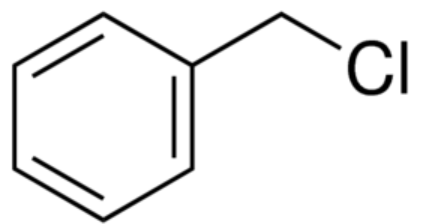 iS'
iS'
1. Chloromethylbenzene
2. Chlorophenylmethane
3. (1) and (2) both
4. None of the above
The IUPAC name of the following compound is:

(1) 4-Bromo-3-cyanophenol
(2) 2-Bromo-5-hydroxybenzonitrile
(3) 2-cyano-4-hydroxybromobenzene
(4) 6-Bromo-3-hydroxybenzonitrile


The silver sulphate solution is used to separate:
1. nitrate and bromide
2. nitrate and chlorate
3. bromide and iodide
4. nitrate and nitrite
Find the method used for the preparation of soda extract.
1. Fusing sodium carbonate with the organic compound mixture, followed by extraction with water
2. Dissolving NaHCO₃ and the organic compound mixture in dilute HCl
3. Boiling Na₂CO₃ and the organic compound mixture with dilute HCl
4. Boiling Na2CO3 and a mixture of hydrocarbons in distilled water


The compound which forms one monochloro product when treated with chlorine is:
(1) n-pentane
(2) isopentane
(3) neo-pentane
(4) None of these
Among the following anions (a) CH3, (b) NH2, (c) OH-, (d) F-, the order of basicity is:
1. a > b > c > d
2. b > a > c > d
3. c > b > a > d
4. c > a > b > d
Find the correct statement regarding the electromeric effect in organic compounds.
1. It is a temporary effect.
2. It is a permanent effect.
3. It is both temporary and permanent.
4. None of the above.


The arrangement in decreasing order of stability of H3, H5,(CH3)2H and (CH3)3 free radicals is:
1. H3 > H5 > (CH3)2H > (CH3)3
2. (CH3)3 > (CH3)2H > H5 > H3
3. H5 > H3 > (CH3)2H > (CH3)3
4. (CH3)3 > (CH3)2H > H3 >H5

© 2026 GoodEd Technologies Pvt. Ltd.