 Q. No.
Choose the correct statement from the ones given below for two anilium in:
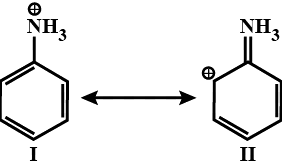
1. II is not an acceptable canonical structure because carbonium ions are less stable than ammonium ions
2. II is not an acceptable canonical structure because it is non-aromatic
3. II is not an acceptable canonical structure because the nitrogen has 10 valence electrons
4. II is an acceptable canonical structure
नीचे दिए गए दो एनिलियम में से सही कथन का चयन कीजिए:

1. II एक स्वीकार्य विहित संरचना नहीं है क्योंकि कार्बोनियम आयन, अमोनियम आयनों की तुलना में कम स्थायी होता है
2. II एक स्वीकार्य विहित संरचना नहीं है क्योंकि यह गैर-ऐरोमैटिक है
3. II एक स्वीकार्य विहित संरचना नहीं है क्योंकि नाइट्रोजन में 10 संयोजी इलेक्ट्रॉन हैं
4. II एक स्वीकार्य विहित संरचना है


In which of the following reaction cyanide will be obtained as a major product ?
1.
2.
निम्नलिखित में से किस अभिक्रिया में साइनाइड को एक मुख्य उत्पाद के रूप में प्राप्त किया जाएगा?
1. 
2. 
3. 
4. 
The product C of the reaction,
CH3CNABC is:
(1) methyl amine
(2) ammonium acetate
(3) ethyl amine
(4) acetamide
अभिक्रिया CH3CNABC का उत्पाद C है:
(1) मेथिल ऐमीन
(2) अमोनियम एसीटेट
(3) एथिल ऐमीन
(4) एसीटैमाइड


What is the end product in the following sequences of operations;
Acetamide ?
1. CH3NH2
2. C2H5NH2
3. CH3CN
4. CH3COONH4
प्रचालन के निम्नलिखित अनुक्रमों में अंतिम उत्पाद क्या है?
एसीटैमाइड ?
1. CH3NH2
2. C2H5NH2
3. CH3CN
4. CH3COONH4
Hydrolysis of alkyl isocyanide yields
1. Primary Amine
2. Tertiary Amine
3. Alcohol
4. Aldehyde
ऐल्किल आइसोसाइनाइड के जलअपघटन से प्राप्त होता है:
1. प्राथमिक ऐमीन
2. तृतीयक ऐमीन
3. एल्कोहॉल
4. एल्डिहाइड


Butanonitrile may be prepared by heating
1. Propyl alcohol with KCN
2. Butyl chloride with KCN
3. Butyl alcohol with KCN
4. Propyl chloride with KCN
ब्यूटेननाइट्राइल को किसके साथ गर्म करके तैयार किया जा सकता है?
1. KCN के साथ प्रोपिल एल्कोहॉल
2. KCN के साथ ब्यूटिल क्लोराइड
3. KCN के साथ ब्यूटिल एल्कोहॉल
4. KCN के साथ प्रोपिल क्लोराइड
Which one of the following is an amine hormone ?
1. Thyroxine
2. Oxypurin
3. Insulin
4. Progesterone
निम्नलिखित में से कौन सा ऐमीन हार्मोन है?
1. थाइरॉक्सिन
2. ऑक्सिप्यूरीन
3. इंसुलिन
4. प्रोजेस्टेरॉन
 (A)
The major product (A) is
1. 
2. 
3. 
4. None of these
 (A)
प्रमुख उत्पाद (A) है:
1. 
2. 
3. 
4. इनमें से कोई नहीं


A nitrogenous substance X is treated with HNO2 and the product so formed is further treated with NaOH solution, which produces blue colouration. X can be:
1.
2.
3.
4.
एक नाइट्रोजनयुक्त पदार्थ X को HNO2 के साथ उपचारित किया जाता है और जो उत्पाद निर्मित होता है, उसे NaOH विलयन के साथ आगे उपचारित किया जाता है, जो नीले रंग का निर्माण करता है। X हो सकता है:
1.
2.
3.
4.

© 2026 GoodEd Technologies Pvt. Ltd.