
The reaction between benzaldehyde and acetophenone in the presence of dilute NaOH is known as:
1. Cannizzaro's reaction
2. Cross Cannizzaro's reaction
3. Cross aldol condensation
4. Aldol condensation


Urea reacts with hydrazine to form:
1. Nitrogen
2. Phenyl hydrazine
3. Semicarbazide
4. Urethane


Which of the following substances releases NH₃ gas upon boiling with NaOH?
1. Ethylamine
2. Aniline
3. Acetamide
4. Acetoxime


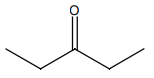
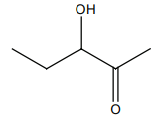
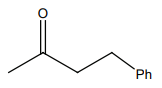
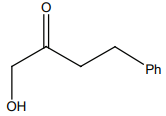


An alkene “A” on reaction with O3 and Zn - H2O gives propanone and ethanal in an equimolar ratio. The addition of HCl to alkene “A” gives “B” as the major product. The structure of product “B” is:
| 1. | 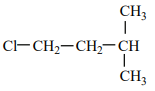 |
2. | 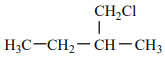 |
| 3. | 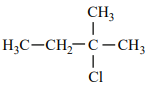 |
4. | 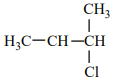 |
Find the reason why carbonyl compounds undergo nucleophilic addition reactions.
1. The electrophilic carbonyl carbon forms a sigma bond with the nucleophile.
2. Electromeric effect.
3. Electronegativity difference of carbon and oxygen atoms.
4. None of the above
Carboxylic acids are more acidic than phenol and alcohol because of
1. formations of dimers
2. highly acidic hydrogen
3. resonance stabilization of their conjugate base
4. intermolecular hydrogen bonding


© 2026 GoodEd Technologies Pvt. Ltd.