


The natural polymer among the following options is:
1. Poly(Butadiene-styrene)
2. Polybutadiene
3. Poly(Butadiene-acrylonitrile)
4. Cis-1,4-polyisoprene

Identify the incorrect statement.
| 1. | The transition metals and their compounds are known for their catalytic activity due to their ability to adopt multiple oxidation states and to form complexes. |
| 2. | Interstitial compounds are those that are formed when small atoms like H, C or N are trapped inside the crystal lattices of metals. |
| 3. | The oxidation states of chromium in CrO42– and Cr2O72– are not the same. |
| 4. | Cr2+(d4) is a stronger reducing agent than Fe2+(d6) in water. |


Which of the following set of molecules will have zero dipole moment?
| 1. | Boron trifluoride, hydrogen fluoride, carbon dioxide, 1 3-dichlorobenzene |
| 2. | Nitrogen trifluoride, beryllium difluoride, water, 1 3 -dichlorobenzene |
| 3. | Boron trifluoride, beryllium difluoride, carbon dioxide, 1 4-dichlorobenzene |
| 4. | Ammonia, beryllium difluoride, water, 1, 4-dichlorobenzene |
On electrolysis of dilute sulphuric acid using Platinum (Pt) electrode, the product obtained at the anode will be:
1. Oxygen gas
2. gas
3. gas
4. Hydrogen gas
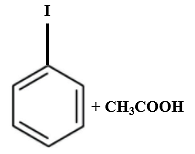
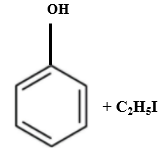
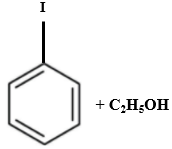
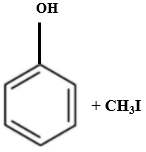


The number of protons, neutrons and electrons in \( _{71}^{175}Lu\) respectively, are:
1. 104, 71 and 71
2. 71, 71 and 104
3. 175, 104 and 71
4. 71, 104 and 71
Match the following:
| Oxide | Nature | ||
| (a) | CO | (i) | Basic |
| (b) | BaO | (ii) | Neutral |
| (c) | Al2O3 | (iii) | Acidic |
| (d) | Cl2O7 | (iv) | Amphoteric |
Which of the following is the correct option?
| a | b | c | d | |
| 1. | (ii) | (i) | (iv) | (iii) |
| 2. | (iii) | (iv) | (i) | (ii) |
| 3. | (iv) | (iii) | (ii) | (i) |
| 4. | (i) | (ii) | (iii) | (iv) |
A tertiary butyl carbocation is more stable than a secondary butyl carbocation because-
1. + R effect of groups
2. R effect of CH3 groups
3. Hyperconjugation
4. l effect of CH3 groups


Which of the following contains the maximum number of atoms ?
| 1. | 1 g of Mg(s) | 2. | 1 g of O2 (g) |
| 3. | 1 g of Li(s) | 4. | 1 g of Ag(s) |

© 2026 GoodEd Technologies Pvt. Ltd.