
 Q. No.


What is present in acetone's enolic form?
1. 9 -bonds, 1-bond and 2 lone pairs
2. 8 -bonds, 2-bonds and 2 lone pairs
3. 10 -bonds, 1-bond and 1 lone pair
4. 9 -bonds, 2-bonds and 1 lone pair


What is the name of a reagent that reacts with both acetaldehyde and ketone?
1. Ammoniacal AgNO3
2. Rochelle salt
3. 2,4-Dinitrophenylhydrazine
4. All of the above
What is the structural difference between an aldehyde and a ketone?
1. -H-atom
2. H-atom combined with carbonyl group
3. OH and carbonyl group
4. None of the above


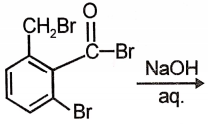

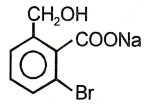
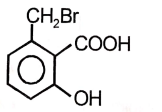


Compound (A) has the molecular formula C₅H₁₀O. It forms phenylhydrazone, gives a negative Tollen’s test and a
negative iodoform test, and on reduction gives n-pentane. Find the nature of compound (A).
1. Primary alcohol
2 . Aldehyde
3. Ketone
4. Secondary alcohol

© 2026 GoodEd Technologies Pvt. Ltd.