
 Q. No.
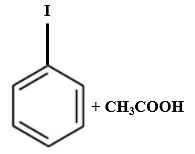
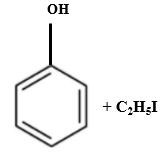
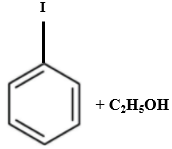
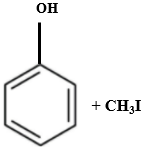

| 1. | sec-Butyl alcohol | 2. | tert-Butyl alcohol |
| 3. | iso-Butyl alcohol | 4. | iso-Propyl alcohol |

Which of the following reagents gives the highest yield of cyclohexene when reacted with cyclohexanol?
1.
2. conc.HCl
3. conc.HBr
4. All of the above


Select the correct option based on statements below:
| Assertion (A): | -OH, -OCH3 groups are o, p-directing. |
| Reason (R): | Ring is activated by the resonance effect of -OH, -OCH3 groups. |
| 1. | Both (A) and (R) are true and (R) is the correct explanation of (A). |
| 2. | Both (A) and (R) are true but (R) is not the correct explanation of (A). |
| 3. | (A) is true but (R) is false. |
| 4. | Both (A) and (R) are false. |
Select the correct option based on the statements given below:
| Assertion (A): | Picric acid is more acidic than formic acid. |
| Reason (R): | Picric acid has three -COOH groups whereas formic acid has one -COOH group. |
| 1. | Both (A) and (R) are True and (R) is the correct explanation of (A). |
| 2. | Both (A) and (R) are True but (R) is not the correct explanation of (A). |
| 3. | (A) is True but (R) is False. |
| 4. | Both (A) and (R) are False. |
Select the correct option based on statements below:
| Assertion (A): | Phenol does not react with NaHCO3 but 2,4,6-trinitrophenol does react with the evolution of CO2 |
| Reason (R): | 2,4,6-trinitrophenol is a stronger acid than carbolic acid. |
| 1. | Both (A) and (R) are true, and (R) is the correct explanation of (A). |
| 2. | Both (A) and (R) are true, but (R) is not the correct explanation of (A). |
| 3. | (A) is True, but (R) is False. |
| 4. | (A) is False, but (R) is True. |


Select the correct option based on statements below:
| Assertion (A): | The solubility of alcohols in water decreases with an increase in the number of carbon atoms. |
| Reason (R): | The non-polar alkyl group or the hydrophobic portion supports the solubility of alcohol. |
| 1. | Both (A) and (R) are True and (R) is the correct explanation of (A). |
| 2. | Both (A) and (R) are True but (R) is not the correct explanation of (A). |
| 3. | (A) is True but (R) is False. |
| 4. | Both (A) and (R) are False. |
The reagent used for the bromination of phenol to 2,4,6-tribromophenol is/are:
1. Bromine water
2. Br2, CS2
3. Br2, CCl4
4. AgBr
Match the structures of the compounds given in Column I with the name of the compounds given in Column II.
| Column I(Structure) | Column II(Name) | ||
| A. |  |
(i). | Phenetole |
| B. |  |
(ii). | o-Cresol |
| C. |  |
(iii). | Catechol |
| D. |  |
(iv). | Resorcinol |
Codes:
| A | B | C | D | |
| 1. | (ii) | (iv) | (i) | (iii) |
| 2. | (iii) | (i) | (iv) | (ii) |
| 3. | (i) | (iv) | (iii) | (ii) |
| 4. | (iv) | (iii) | (ii) | (i) |


Match the starting material in Column I with the products formed (Column II) in the reaction with HI.
| Column I |
Column II |
||
| A. |  |
1. |  |
| B. |  |
2. |  |
| C. |  |
3. |  |
| D. |  |
4. |  |
| 5. |  |
| A | B | C | D | |
| 1. | 2 | 3 | 4 | 1 |
| 2. | 3 | 1 | 5 | 2 |
| 3. | 5 | 4 | 3 | 2 |
| 4. | 4 | 5 | 2 | 1 |

© 2026 GoodEd Technologies Pvt. Ltd.