Select Question Set:

 Q. No.


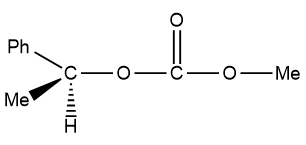

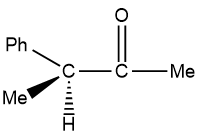

Subtopic: Aldehydes & Ketones: Preparation & Properties |
54%
Level 3: 35%-60%
Hints

Which step is not feasible in the following loop?

(1) step – a
(2) step – b
(3) step – c
(4) step – d

Subtopic: Isomers & Reaction Mechanism |
Level 3: 35%-60%
Hints


Subtopic: Aldehydes & Ketones: Preparation & Properties |
68%
Level 2: 60%+
Hints


Subtopic: Aldehydes & Ketones: Preparation & Properties |
62%
Level 2: 60%+
Hints


Subtopic: Aldehydes & Ketones: Preparation & Properties |
66%
Level 2: 60%+
Hints
The number of stereoisomeric products formed in the following reaction is

(1) 1
(2) 8
(3) 4
(4) 2
Subtopic: Aldehydes & Ketones: Preparation & Properties |
Level 3: 35%-60%
Hints


Subtopic: Aldehydes & Ketones: Preparation & Properties |
54%
Level 3: 35%-60%
Hints
In which of the following compounds O18 exchange can be observed on keeping it in H2O18
| (1) |  |
| (2) |  |
| (3) |  |
| (4) |  |
Subtopic: Acid Derivatives - Preparation, Properties & Uses |
Level 3: 35%-60%
Hints
The possible number of stereoisomers of the product of following reaction would be :

(1) 2
(2) 4
(3) 6
(4) 8
Subtopic: Aldehydes & Ketones: Preparation & Properties |
Level 3: 35%-60%
Hints


Which of the following ketone recemises in aqueous solution containing some acidic or basic impurities.
| (1) |  |
| (2) |  |
| (3) |  |
| (4) |  |
Subtopic: Aldehydes & Ketones: Preparation & Properties |
50%
Level 3: 35%-60%
Hints
Select Question Set:

© 2026 GoodEd Technologies Pvt. Ltd.