Select Question Set:

 Q. No.
Why does the reaction produce stable salt?

Because
1. In 'A' the ring is aromatic
2. 6 p electrons are present
3. Ring in a is stabilized by closed-loop conjugation
4. All of these

Subtopic: Aldehydes & Ketones: Preparation & Properties |
90%
Level 1: 80%+
Hints


Subtopic: Aldehydes & Ketones: Preparation & Properties |
52%
Level 3: 35%-60%
Hints


Subtopic: Aldehydes & Ketones: Preparation & Properties |
Level 3: 35%-60%
Hints


Subtopic: Aldehydes & Ketones: Preparation & Properties |
58%
Level 3: 35%-60%
Hints




Subtopic: Aldehydes & Ketones: Preparation & Properties |
54%
Level 3: 35%-60%
Hints
Which step is not feasible in the following loop?

(1) step – a
(2) step – b
(3) step – c
(4) step – d
Subtopic: Isomers & Reaction Mechanism |
Level 3: 35%-60%
Hints


Subtopic: Aldehydes & Ketones: Preparation & Properties |
68%
Level 2: 60%+
Hints


Subtopic: Aldehydes & Ketones: Preparation & Properties |
62%
Level 2: 60%+
Hints


Subtopic: Aldehydes & Ketones: Preparation & Properties |
66%
Level 2: 60%+
Hints


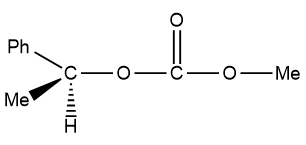
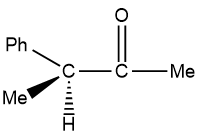
The number of stereoisomeric products formed in the following reaction is

(1) 1
(2) 8
(3) 4
(4) 2
Subtopic: Aldehydes & Ketones: Preparation & Properties |
Level 3: 35%-60%
Hints
Select Question Set:

© 2026 GoodEd Technologies Pvt. Ltd.