 Target DPP TestContact Number: 8527521718Target DPP TestContact Number: 8527521718
Which of the following statements regarding enzyme inhibition is correct?
| 1. | Competitive inhibition is seen when a substrate competes with an enzyme for binding to an inhibitor protein |
| 2. | Competitive inhibition is seen when the substrate and the inhibitor compete for the active site on the enzyme |
| 3. | Non-competitive inhibition of an enzyme can be overcome by adding large amount of substrate |
| 4. | Non-competitive inhibitors often bind to the enzyme irreversibly |
Select the option which is not correct with respect to enzyme action.
| 1. | Substrate binds with enzyme as its active site |
| 2. | Addition of lot of succinate does not reverse the inhibition of succinic dehydogenase by malonate. |
| 3. | A non-competitive inhibitor binds the enzyme at a site distinct from that which binds the substrate |
| 4. | Malonate is a competitive inhibitor of succinic dehydrogenase |
Which of the following secondary metabolites is an anticancer drug?
1. Vinblastin
2. Concanavalin A
3. Abrin
4. Ricin
In an average composition of a cell, the maximum % of total cellular mass [after water and protein] is constituted by:
1. Carbohydrates
2. Lipid
3. Nucleic acids
4. Ions
Given below is the graph showing the effect of substrate concentration on enzyme activity. In the presence of a competitive inhibitor, when the concentration of the substrate is progressively increased:
| 1. | The Km value increases but the reaction will not achieve Vmax |
| 2. | The Km value increases but the reaction can ultimately achieve Vmax |
| 3. | The Km value decreases but the reaction will not achieve Vmax |
| 4. | The Km value decreases but the reaction can ultimately achieve Vmax |
The compound shown below: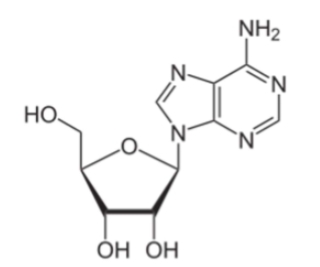
1. is a component of the ATP molecule
2. is most commonly found in ori region of DNA
3. can have enzymatic activity
4. may be a component of the cell membrane
Given below is the diagrammatic representation of one of the categories of small
molecular weight organic compounds in the living tissues. Identify the category shown
and the one blank component X in it
Category Component
1. Cholesterol Guanin
2. Amino acid NH2
3. Nucleotide Adenine
4. Nucleoside Uracil
Which one of the following structural formulae of two organic compounds is correctly
identified with its related function?
1. A - triglyceride major - a source of energy
2. A - Lecithin - a component of cell membrane
3. B - Adenine - forms nucleotides of the nucleic acids
4. Both 2. and 3.
In a 50 gm living tissue, what would be the amount of water?
1. 15-25 gm
2. 25-30 gm
3. 35-45 gm
4. 70-90 gm
In a normal adult, ascending order of concentration of following molecules is
1. Na>K>Fe>Cu
2. Na>K>Cu>Fe
3. Fe>Na>K>Cu
4. Na>Fe>K>Cu
The quaternary structure of a protein:
| 1. | Consists of 4 subunits - hence the name quaternary |
| 2. | Is unrelated to the function of the protein |
| 3. | Both (a) and (b) |
| 4. | Depends on the 1° structure of subunits |
Which one is false?
1. Fatty acids may be unsaturated (with one or more C = C bonds) or a saturated (without double bonds)
2. Fatty acid(s) may be esterified with glycerol forming monoglyceride, diglyceride and then triglyceride
3. Some tissues especially neural tissues have lipids with very simple structures
4. Fats and oils are triglycerides
Which of the following statements about enzymes is true?
1. Enzymes do not alter the overall change in free energy for a reaction
2. Enzymes are proteins whose three dimensional shape is key to their functions
3. Enzymes speed up reactions by lowering activation energy
4. Enzyme are highly specific for reactions
5. An enzyme like any protein has the secondary and tertiary structure.
6. The energy input needed to start a chemical reaction is called activation energy
1. All are correct
2. All except 5
3. 5 and 6
4. 2 and 4
How many types of nitrogenous bases are present in nucleic acid
1. 4
2. 3
3. 5
4. 6
Which of the following is present as a store house of energy in animal tissues?
1. Cellulose
2. Sucrose
3. Glycogen
4. Starch
The number of correct statements amongst the given statements is:
I. Amino acids are substitute methanes.
II. The R group in serine is hydroxyl-methyl.
III. Arachidonic acid has 20 carbon atoms including the carboxyl carbon.
IV. Glycerol is trihydroxypropane.
V. Lecithin is a phospholipid.
1. 2
2. 3
3. 4
4. 5
Which of the following is the simplest amino acid?
1. Alanine
2. Asparagine
3. Glycine
4. Tyrosine
How many groups of the methane can be substituted to form an amino acid Glycine.
1.4
2.3
3.2
4.1
Which group of the amino acid contributes essentially to the chemical and physical properties of amino acids?
1.Amino group
2.Carboxyl group
3.Alkyl group (R group)
4.All of these
Which of the following is true about Lipids
1.It is a polymer of Fatty acids and Glycerol
2.Water soluble
3.Fatty acids can be saturated or unsaturated
4.both 1 and 3
The least abundant element present in human body is
1. Oxygen
2. Carbon
3. Nitrogen
4. Hydrogen
Which of the following is incorrect?
1. Enzymatic activity is maximum at its optimim pH and temperature.
2. Enzymatic activity declines both below and above the optimum value.
3. Low temperatures destroys enzymatic activity
4. High temperatures destroys enzymatic activity
Electron transferring enzymes belongs to which class of enzymes
1. Transferases
2. Oxidoreductases
3. Isomerases
4. Lyases
About 98% of the mass of every living organism is composed of just six elements including carbon, hydrogen, nitrogen, oxygen and:
1. Phosphorous and sulphur
2. Sulphur and magnesium
3. Magnesium and sodium
4. Calcium and phosphorous
When chemical analysis of living tissue was done using trichloroacetic acid, then the filtrate formed was
1. acid insoluble fraction
2. acid soluble fraction
3. retentate
4. Both (1) and (3)
1. increasing the amount of substrate
2. adding more water
3. increasing the temperature
4. decreasing enzyme concentration
What level of protein organization structure explains the 3-D shape of an enzyme?
| 1. | primary structure |
| 2. | tertiary structure |
| 3. | secondary structure |
| 4. | quaternary structure |
During catalytic cycle of an enzyme–
| 1. | Enzyme alter its shape to fit the substrate molecule. |
| 2. | Substrate alter its shape to get fit into the enzyme molecule. |
| 3. | Both enzyme and substrate changes its shape during transition state. |
| 4. | Enzyme and substrate are rigid molecular structure and it never changes its shape. |
Nucleotides are building blocks of nucleic acids. Each nucleotide is a composite molecule formed by
| 1. | base-sugar-phosphate |
| 2. | base-sugar-OH |
| 3. |  |
| 4. | sugar-phosphate |
The blood concentration of blood glucose in a normal healthy human ranges between:
1. 4.5 – 5.0 mM
2. 45 – 50 mM
3. 70 – 100 nM
4. 100 – 150 mM
Transferases do not catalyze the transfer of the following group between a pair of substrates:
| 1. Glycosyl | 2. Amine |
| 3. Carboxyl | 4. Hydrogen |
An example of protein with quaternary structure is
1. Myoglobin
2. Hemoglobin
3. Keratin
4. All of these
Identify the structure of the amino acid that is a Zwitter ion :
| 1. |  |
2. |  |
| 3. |  |
4. |  |
Similarity between Inulin, Lecithin and Insulin is -
| 1. | All are polymeric compound. |
| 2. | All are natural polypeptides. |
| 3. | All contains C,H,O and N. |
| 4. | None of these. |
Prosthetic groups differ from co-enzymes, in which:
| 1. | they require metal ions for their activity. |
| 2. | they (prosthetic groups) are tightly bound to apoenzymes. |
| 3. | their association with apoenzymes is transient. |
| 4. | they can serve as co-factors in a number of enzyme-catalyzed reactions. |
Study the given statements -
| i. | A dehydration reaction (or condensation reaction) is the process in which water molecules are produced as a polymer is formed from monomers. |
| ii. | The four main categories of macromolecules present in living systems are proteins, nucleic acids, carbohydrates, and lipids. |
| iii. | Glucose is the main monosaccharide used by human cells for energy. |
| iv. | The building blocks or monomers of nucleic acid molecules are called nucleosides. |
How many statements are correct?
1. i
2. ii
3. iii
4. iv
Which one of the following biomolecules is correctly characterized?
1. Lecithin – a phosphorylated glyceride found in cell membrane
2. Palmitic acid – an unsaturated fatty acid with 18 carbon atoms
3. Adenylic acid – adenosine with a glucose and phosphate molecule
4. Alanine amino acid – contains an amino group and an acidic group anywhere in the molecule
Which of the following is not a secondary metabolite?
1. Antibiotics
2. Vitamins
3. Carotenoids
4. Morphine
Which of the following monosaccharide is pentose sugar?
| 1. | Mannose | 2. | Ribose |
| 3. | Galactose | 4. | Glucose |
Cytidine is a/an
| 1. | Nucleoside |
| 2. | Nucleotide |
| 3. | Essential amino acid |
| 4. | Non essential amino acid |
The molecule that provides stability to cell membrane is
The molecule represented is :-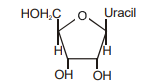
| 1. | uridine and it is pyrimidine |
| 2. | uridylic acid and it is nucleoside |
| 3. | uridylic acid and it is nucleotide |
| 4. | uridine and it is nucleoside |
An aromatic amino acid which is not an essential amino acid is the precursor of catecholamines [adrenaline/noradrenaline/dopamine] and also involved in the synthesis of iodothyronines is:
1. Tryptophan
2. Threonine
3. Phenylalanine
4. Tyrosine
Match the following:
| (a) | Inhibitor of catalytic activity of succinate dehydrogenase | (i) | Ricin |
| (b) | Possess peptide bonds | (ii) | Malonate |
| (c) | Cell wall material in fungi | (iii) | Chitin |
| (d) | Secondary metabolite | (iv) | Collagen |
| (a) | (b) | (c) | (d) | |
| 1. | (iii) | (i) | (iv) | (ii) |
| 2. | (iii) | (iv) | (i) | (ii) |
| 3. | (ii) | (iii) | (i) | (iv) |
| 4. | (ii) | (iv) | (iii) | (i) |
Select the incorrect statement.
| 1. | Dietary proteins are the source of essential amino-acids. |
| 2. | Concanavalin A is a lectin and is considered a secondary metabolite |
| 3. | Cellulose, inulin, starch and glycogen are homopolymers of glucose |
| 4. | Phosphodiester bonds are a characteristic feature of both RNA and DNA |
Zwitterions are ionized species of
1. Acidic amino acids
2. Basic amino acids
3. Neutral amino acids
4. All of these
Which of the following is mismatched?
| 1. | Chitin - Polymer of glucosamine |
| 2. | Glycogen - Polymer of glucose |
| 3. | Cellulose - Heteropolysaccharide |
| 4. | Inulin - Homopolysaccharide |
Antibodies that help to fight infectious agents are
1. Polysaccharides
2. Amino acids
3. Proteins
4. Glucose
It is said that elemental composition of living organisms and that of inanimate objects (like earth’s crust) are similar in the sense that all the major elements are present in both. Then what would be the difference between these two groups? Choose a correct answer from among the following.
| 1. | Living organisms have more gold in them than inanimate objects |
| 2. | Living organisms have more water in their body than inanimate objects |
| 3. | Living organisms have more carbon, oxygen and hydrogen per unit mass than inanimate objects |
| 4. | Living organisms have more calcium in them than inanimate objects |
Identify a nucleoside containing a pyrimidine base:
1. Adenine
2. Cytidine
3. Guanosine
4. Thymidylic acid
| I: | Cellulose does not contain complex helices. |
| II: | Inulin is a polymer of fructose. |
| III: | Left end of glycogen is the reducing end |
| 1. | α amino acids are substituted methanes |
| 2. | Only triglycerides are lipids that are both macromolecules as well as polymers |
| 3. | Cellulose forms secondary helical structures and can hold iodine molecules in the helical portion |
| 4. | Every virus will have both DNA and RNA as its genetic material |
Identify the zwitterion configuration of alanine:
| 1. | 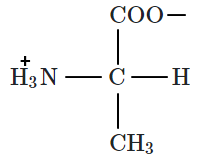 |
| 2. | 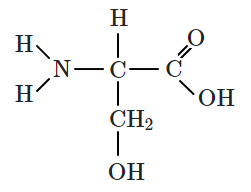 |
| 3. | 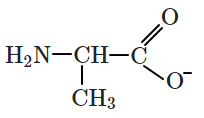 |
| 4. | 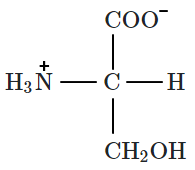 |
Read the following statements on lipids and find out correct set of statements:
| a: | Lecithin found in the plasma membrane is a glycolipid. |
| b: | Saturated fatty acids possess one or more c=c bonds. |
| c: | Gingely oil has lower melting point, hence remains as oil in winter. |
| d: | Lipids are generally insoluble in water but soluble in some organic solvents. |
| e: | When fatty acid is esterified with glycerol, monoglycerides are formed. |
Choose the correct answer from the options given below:
1. (a), (b) and (d) only
2. (a), (b) and (c) only
3. (a), (d) and (e) only
4. (c), (d) and (e) only
| I: | The level of protein structure organization that provides the positional information of amino acids in a protein is called as the primary structure. |
| II: | Only right handed helices are observed in proteins seen in living organisms. |
| III: | Tertiary structure is absolutely necessary for the many biological activities of proteins. |
| 1. | Only I and II | 2. | Only I and III |
| 3. | Only II and III | 4. | I, II and III |
| Statement I: | Amino acids have a property of ionizable nature of –NH2 and –COOH groups, hence have different structures at different pH. |
| Statement II: | Amino acids can exist as Zwitterionic form at acidic and basic pH. |
| 1. | Both Statement I and Statement II are correct. |
| 2. | Both Statement I and Statement II are incorrect. |
| 3. | Statement I is correct but Statement II is incorrect. |
| 4. | Statement I is incorrect but Statement II is correct. |
| (a) | In glycogen, the right end is the reducing one |
| (b) | Cellulose and starch form complex helices |
| (c) | Starch is the main structural component of papers made from plant pulp |
| 1. | Statements (a) and (b) are correct while statement (c) is incorrect |
| 2. | Statements (a) and (c) are correct while statement (b) is incorrect |
| 3. | Statements (b) and (c) are incorrect while statement (a) is correct |
| 4. | Statements (a) and (c) are incorrect while statement (b) is correct |
| Assertion (A): | The exoskeleton of insects is made of chitin. |
| Reason (R): | Chitin is a homopolysaccharide. |
| 1. | Both (A) and (R) are true and (R) is the correct explanation of (A). |
| 2. | Both (A) and (R) are true but (R) is not the correct explanation of (A). |
| 3. | (A) is true but (R) is false. |
| 4. | Both (A) and (R) are false. |
| 1. | 20 | 2. | 80 |
| 3. | 60 | 4. | 40 |
| List-I | List-II | ||
| (A) | Terpenoids | (I) | Vinblastin |
| (B) | Lectins | (II) | Diterpenes |
| (C) | Drug | (III) | Ricin |
| (D) | Toxin | (IV) | Concanavalin A |
| Options: | (A) | (B) | (C) | (D) |
| 1. | II | IV | III | I |
| 2. | II | I | IV | III |
| 3. | II | III | I | IV |
| 4. | II | IV | I | III |
| Assertion (A): | Enzyme through their active site, catalyse reactions at high rate. |
| Reason (R): | An active site of an enzyme is a pocket formed always in the quaternary structure of protein into which substrate fits. |
| 1. | Both (A) and (R) are true and (R) is the correct explanation of (A). |
| 2. | Both (A) and (R) are true but (R) is not the correct explanation of (A). |
| 3. | (A) is true but (R) is false. |
| 4. | Both (A) and (R) are false. |
| 1. | cascade | 2. | metabolic pathway |
| 3. | cycle | 4. | amphibolic pathway |
| 1. | nucleic acids | 2. | carbohydrates |
| 3. | lipids | 4. | metal ions |
| 1. | Primary | 2. | Secondary |
| 3. | Tertiary | 4. | Quaternary |
| Assertion (A): | Proteins can have a quaternary structure. |
| Reason (R): | The quaternary structure of a protein is the folding of the protein into a helix. |
| 1. | Both (A) and (R) are True and (R) correctly explains (A) |
| 2. | Both (A) and (R) are True but (R) does not correctly explain (A) |
| 3. | (A) is True but (R) is False |
| 4. | Both (A) and (R) are False |
| Statement I: | Macromolecules are generally polymers of smaller units called monomers. |
| Statement II: | Lipids are macromolecules due to their high molecular weight. |
| 1. | Statement I is correct; Statement II is correct |
| 2. | Statement I is correct; Statement II is incorrect |
| 3. | Statement I is incorrect; Statement II is correct |
| 4. | Statement I is incorrect; Statement II is incorrect |
| 1. | Amino and acidic groups are present on the same carbon atom. |
| 2. | Presence of a hydroxyl group on the R group. |
| 3. | Substitution of the amino group by a carboxyl group. |
| 4. | All four substituents on the α-carbon are identical. |
| 1. | They provide stability to the enzyme structure. |
| 2. | They temporarily bind to the enzyme during catalysis and participate in the reaction. |
| 3. | They permanently attach to the enzyme and form the active site. |
| 4. | They act as inhibitors to regulate the reaction rate. |
| Assertion (A): | Inhibition of succinic dehydrogenase by succinate is an example of competitive enzyme inhibition. |
| Reason (R): | Succinate closely resembles malonate in structure. |
| 1. | Both (A) and (R) are True and (R) correctly explains (A). |
| 2. | Both (A) and (R) are True and (R) does not correctly explain (A). |
| 3. | (A) is True, (R) is False. |
| 4. | (A) is False, (R) is True |


