 Revision DPP - 20-Jul-24Contact Number: 8527521718Revision DPP - 20-Jul-24Contact Number: 8527521718
XY. Y is:
1.
2.
3.
4.
The major product of the following reaction is:

1. Butene
2. But-2-ene
3. Butane
4. But-1-yne
Consider the spectral line resulting from transition \(n=2\) to \(n = 1\) in the atoms and ions given below. The shortest wavelength is given by:
| 1. | hydrogen atom |
| 2. | deuterium |
| 3. | singly ionised helium |
| 4. | doubly ionised lithium |
Among the following non-reducing sugar is :
(1) Glucose
(2) Fructose
(3) Sucrose
(4) Galactose
Identify the correct statement regarding the stem morphology from the following:
| I: | Stems bear only axillary buds. |
| II: | Axillary buds may get modified into thorns as in Citrus |
| III: | Stem tendrils develop from axillary buds as in gourds. |
| 1. | Only I and II | 2. | Only I and III |
| 3. | Only II and III | 4. | I, II and III |
| 1. | \(\frac{1}{8}\) | 2. | \(\frac{3}{8}\) |
| 3. | \(\frac{5}{8}\) | 4. | \(\frac{7}{8}\) |
| Column I | Column II | |
| 1. | Ovulation | LH and FSH attain peak levels and sharp fall in the secretion of progesterone |
| 2. | Proliferative phase | Rapid regeneration of myometrium and maturation of Graafian follicle |
| 3. | Development of corpus luteum | Secretory phase and increased secretion of progesterone |
| 4. | Menstruation | Breakdown of myometrium and ovum not fertilized |
Colloids can be prepared by
1. Tyndall Effect
2. Electrophoresis
3. Dialysis
4. Peptization
Imbricate Aestivation (petal) is found in
1. Gulmohur
2. Cotton
3. Calotropis
4. Mustard
Which of the following organic compounds has same hybridization as its combustion product –(CO2)?
| 1. | Ethane | 2. | Ethyne |
| 3. | Ethene | 4. | Ethanol |
The most suitable reagent for the following conversion is-
| 1. | Hg2+/ H+, H2O | 2. | Na/liquid NH3 |
| 3. | H2, Pd/C, quinoline | 4. | Zn/HCl |
The escape velocity from the surface of a planet is
V. The escape velocity from a planet having twice
the radius and the same mean density as the former
is:
1. 2V 2. V
3. V/2 4. None of these
Identify the correct statements amongst the following:
| I: | When a shoot tip transforms into a flower, it is always solitary |
| II: | In racemose inflorescence, the main axis continues to grow and flowers are borne in basipetal order |
| III: | In cymose inflorescence, the main axis terminates in a flower and flowers are borne in basipetal order |
| 1. | Only I | 2. | Only I and II |
| 3. | Only I and III | 4. | Only II and III |
Keel is characteristic of the flowers of
1. Cassia
2. Calotropis
3. Bean
4. Gulmohur
Which of the following is not applicable to birds?
| 1. | Epidermal scales modified into feathers |
| 2. | Pneumatic bones |
| 3. | Right side ovary and oviduct well developed |
| 4. | Uterus is absent |
Following is the diagram of different types of muscle tissue
Select the option which is correct identification of muscle tissue and its location
| A | B | C | |
| 1. | Cardiac muscle in heart | Smooth muscle in wall of blood vessels | Skeletal muscle in arm |
| 2. | Skeletal muscle in arm | Smooth muscle in thigh | Cardiac muscle in heart |
| 3. | Skeletal muscle in thigh | Smooth muscle in wall of stomach | Cardiac muscle in heart |
| 4. | Cardiac muscle in heart | Smooth muscle in thigh | Skeletal muscle in arm |
In root, the rate of water absorption is maximum in
1. root cap
2. meristematic zone
3. zone of cell elongation
4. zone of cell maturation
The functional residual capacity is:
(1) Tidal volume (TV) + Inspiratory reserve volume (IRV)
(2) IRV + Expiratory reserve volume (ERV)
(3) IRV + TV + ERV
(4) ERV + Residual volume (RV)
The longest and the largest bone in the human body is:
(1) femur
(2) Tibia
(3) Humerus
(4) Radius
Measuring Zeta potential is useful in determining which property of colloidal solution?
1. Solubility
2. Stability of the colloidal particles
3. Size of the colloidal particles
4. Viscosity
Ray florets have:
1. Superior ovary
2. Hypogynous ovary
3. Half inferior ovary
4. Inferior ovary
Which of the following polymer is stored in the liver of animals?
| 1. | Amylose | 2. | Cellulose |
| 3. | Amylopectin | 4. | Glycogen |
for combustion of methane is –x kJ mol–1.
The value of for the same reaction would be:
Photosynthetic organ originates from _______ meristem and arranged in ______ order.
1. Lateral, basipetal
2. Root apical, acropetal
3. Shoot apical, acropetal
4. Intercalary, acropetal
The IUPAC name of the product that formed in the following chemical reaction is:
\(\text{Acetone}\xrightarrow[\bf\text{(ii) H}_2\text{O, H}^+]{\bf\text{(i) C}_2\text H_5\text{MgBr, dry Ether}}\text{Product } \)
| 1. | Pentan-3-ol | 2. | 2-Methyl butan-2-ol |
| 3. | 2-Methyl propan-2-ol | 4. | Pentan-2-ol |
Given below are two statements:
| Statement I: | The magnetic field due to a segment \({d\vec l}\) of a current-carrying wire carrying a current, \(I\) is given by: \({d\vec B}=\dfrac{\mu_0}{4\pi}~I\left({d\vec l}\times\dfrac{\vec r}{r^3}\right ),\) where \(\vec{r}\) is the position vector of the field point with respect to the wire segment. |
| Statement II: | The magnetic field of a current-carrying wire is never parallel to the wire. |
| 1. | Statement I and Statement II are True and Statement I is the correct explanation of Statement II. |
| 2. | Statement I and Statement II are True and Statement I is not the correct explanation of Statement II. |
| 3. | Statement I is True, and Statement II is False. |
| 4. | Statement I is False, and Statement II is True. |
Collecting duct does not:
| I: | allow reabsorption of large amount of water during concentration of urine. |
| II: | allow passage of small amounts of urea into medullary interstitium to keep up the osmolarity. |
| III: | play a role in the maintenance of pH and ionic balance of blood by the selective secretion of H+ and K+ ions. |
| 1. | Only I and II | 2. | Only III |
| 3. | Only II | 4. | I, II and III are incorrect |
| 1. | HIV infection and Trichomoniasis |
| 2. | Syphilis and Trichomoniasis |
| 3. | Hepatitis-B and Genital herpes |
| 4. | Genital Herpes and Genital warts |

| 1. | \(\mathrm{CH}_3 \mathrm{CH}_2 \mathrm{OH} \) | 2. | \(\mathrm{CH}_3 \mathrm{CH}_2-\mathrm{Br} \) |
| 3. | BrCH2CH2Br | 4. | 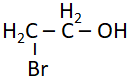 |
| 1. | 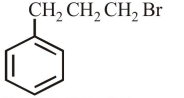 |
2. | 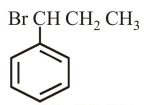 |
| 3. | 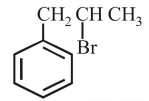 |
4. | 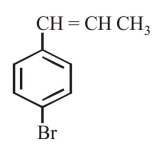 |

