 Organic Chemistry - Class 12th - Practice MCQsContact Number: 8527521718Organic Chemistry - Class 12th - Practice MCQsContact Number: 8527521718
Given below are two statements:
| Assertion (A): | It is difficult to replace chlorine by -OH in chlorobenzene in comparison to that in chloroethane. |
| Reason (R): | Chlorine carbon (C—Cl) bond in chlorobenzene has a partial double bond character due to resonance. |
| 1. | Both (A) and (R) are True and (R) is the correct explanation of (A). |
| 2. | Both (A) and (R) are True but (R) is not the correct explanation of (A). |
| 3. | (A) is True but (R) is False. |
| 4. | (A) is False but (R) is True. |
Carbonyl compound is treated with--- in Clemmensen reduction .
1. Zinc amalgam + HCl
2. Sodium amalgam + HCl
3. Zinc amalgam + nitric acid
4. Sodium amalgam +

Match the structures given in Column-I with the IUPAC names in Column-II.
| Column-I (Structure) | Column-II (IUPAC Name) | ||
| A. |  |
(i) | 4-Bromopent-2-ene |
| B. |  |
(ii) | 4-Bromo-3-methylpent-2-ene |
| C. |  |
(iii) | 1-Bromobut-2-ene |
| D. |  |
(iv) | 1-Bromo-2-methylpent-2-ene |
Codes:
| A | B | C | D | |
| 1. | (ii) | (iii) | (iv) | (i) |
| 2. | (i) | (ii) | (iii) | (iv) |
| 3. | (i) | (iv) | (iii) | (ii) |
| 4. | (iv) | (i) | (iii) | (ii) |
Match the items of Column I and Column II.
Column I Column II
(i) reaction (a) vic-dibromides
(ii) Chemicals in fire extinguisher (b) gem-dihalides
(iii) Bromination of alkenes (c) Racemisation
(iv) Alkylidene halides (d) Saytzeff rule
(v) Elimination of HX from alkylhalide (e) Chlorobromocarbons
1. (i) → (e) (ii) → (c) (iii) → (b) (iv) → (a) (v) → (d)
2. (i) → (c) (ii) → (e) (iii) → (a) (iv) → (b) (v) → (d)
3. (i) → (e) (ii) → (d) (iii) → (b) (iv) → (a) (v) → (c)
4. (i) → (b) (ii) → (d) (iii) → (a) (iv) → (c) (v) → (e)

The major product of the following reaction is: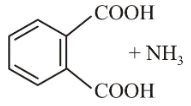
1.
2.
3.
4.
The compound below is treated with a concentrated aqueous KOH solution. The products obtained are:

| 1. |  |
| 2. |  |
| 3. |  |
| 4. |  |
| 1. |  |
2. |  |
| 3. |  |
4. | None of the above |
| 1. |  |
2. |  |
| 3. |  |
4. | None of the above |
In the given reaction scheme, identify the final product Z:
1. Toluene
2. Benzaldehyde
3. Benzoic acid
4. Benzene
The order of reactivity of following alcohols with halogen acids is:
| I. |  |
| II. |  |
| III. |  |
1. (I) >(II) > (III)
2. (III) > (II) > (I)
3. (II) >(I) > (III)
4. (I) >(III) > (II)
| Column I | Column II | ||
| a. | 2-Hydroxycyclopentane carbaldehyde | i. |  |
| b. | Di-sec-butyl ketone | ii. |  |
| c. | α-Methoxypropionaldehyde | iii. |  |
| d. | 4-Fluoroacetophenone | iv. |  |
| 1. | a-iv; b-i; c-iii; d-ii | 2. | a-ii; b-iv; c-i; d-iii |
| 3. | a-iii; b-i; c-iv; d-ii | 4. | a-iv; b-iii; c-i; d-ii |
What is the correct order of reactivity of alcohols in the following reaction?
| 1. | 1° > 2°> 3° | 2. | 1° < 2°> 3° |
| 3. | 3°> 2°> 1° | 4. | 3°> 1°> 2° |
Benzaldehyde and acetaldehyde can be distinguished by:
1. Iodoform test
2. 2:4 DNP test
3. reaction
4. Wolff-Kishner's reduction
Match the compounds in Column I with their respective effects in Column II:
|
Column l (Compounds) |
Column lI (Effect) |
|
A. Chloramphenicol |
I. Malaria |
|
B. Thyroxine |
II. Anaesthetic |
|
C. Chloroquine |
III. Typhoid fever |
|
D. Chloroform |
IV. Goiter |
|
V. Blood substituent |
Codes:
| Options: | A | B | C | D |
| 1. | II | III | IV | I |
| 2. | III | IV | I | II |
| 3. | V | IV | III | II |
| 4. | IV | V | III | II |
Match the structures of the compounds given in Column I with the name of the compounds given in Column II.
| Column I(Structure) | Column II(Name) | ||
| A. |  |
(i). | Phenetole |
| B. |  |
(ii). | o-Cresol |
| C. |  |
(iii). | Catechol |
| D. |  |
(iv). | Resorcinol |
Codes:
| A | B | C | D | |
| 1. | (ii) | (iv) | (i) | (iii) |
| 2. | (iii) | (i) | (iv) | (ii) |
| 3. | (i) | (iv) | (iii) | (ii) |
| 4. | (iv) | (iii) | (ii) | (i) |
Identify the compound Y in the following reaction.
1.
2.
3.
4.
The given reaction will be the fastest in which of the following solvents?
CH3 CH2 CH2 Br + NaCN - CH3 CH2 CH2 CN + NaBr
1. Ethanol
2. Methanol
3. N, N'-dimethylformamide (DMF)
4. Water
Select the correct option based on statements below:
| Assertion (A): | p-Nitrophenol is more acidic than phenol. |
| Reason (R): | Nitro group helps in the stabilization of the phenoxide ion by dispersal of negative charge due to resonance. |
| 1. | Both (A) and (R) are True and (R) is the correct explanation of (A). |
| 2. | Both (A) and (R) are True but (R) is not the correct explanation of (A). |
| 3. | (A) is True but (R) is False. |
| 4. | (A) is False but (R) is True. |
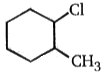
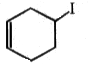
Which of the following alkyl halide undergo rearrangement in SN1 reaction?
1.
2. 
3. 
4. All of these
The correct order of increasing acidic strength is:
| 1. | Phenol < Ethanol < Chloroacetic acid < Acetic acid |
| 2. | Ethanol < Phenol < Chloroacetic acid < Acetic acid |
| 3. | Ethanol < Phenol < Acetic acid < Chloroacetic acid |
| 4. | Chloroacetic acid < Acetic acid < Phenol < Ethanol |
Phenol on treatment with dilute HNO3 gives two products P and Q. P is steam volatile but Q is not. P and Q are, respectively:
| 1. |  |
| 2. |  |
| 3. |  |
| 4. |  |
Toluene reacts with a halogen in the presence of iron (III) chloride giving ortho and para halo compounds. The reaction is:
1. Electrophilic elimination reaction
2. Electrophilic substitution reaction
3. Free radical addition reaction
4. Nucleophilic substitution reaction
Given the following reaction:
What is the structure of the product formed in this reaction?
| 1. |  |
2. |  |
| 3. |  |
4. |  |
In a set of reactions, m-bromobenzoic acid gave a product D. The product D is:
| 1. |  |
2. |  |
| 3. |  |
4. |  |
Which compounds will not reduce Fehling's solution?
1. Methanal
2. Ethanal
3. Trichloroethanal
4. Benzaldehyde
Among the following sets of reactants which one produces anisole?
1. CH3CHO, RMgX
2. C6H5OH, NaOH, CH3I
3. C6H5OH, neutral FeCl3
4. C6H5-CH3, CH3COCl, AlCl3
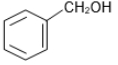
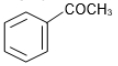
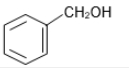
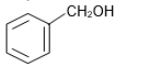
The reaction that does not yield benzoic acid as the major product is:
1. 
2. 
3. 
4. 
Which of the following reagents can be used to oxidize primary alcohols to aldehydes?
I. in anhydrous medium
II. in acidic medium
III. Pyridinium chlorochromate
IV. Heat in the presence of Cu at 573K
Choose the correct option:
1. (I, II, III)
2. (II, III, IV)
3. (I, III, IV)
4. (I, II, IV)
What is the product (Y) formed in the following sequence of reactions?
| 1. |  |
2. |  |
| 3. |  |
4. |  |

| 1. |  |
| 2. |  |
| 3. |  |
| 4. | None of the above |
The conversion of alkyl halides into alcohols involves which of the following types of reactions?
1. Addition reaction
2. Substitution reaction
3. Dehydrohalogenation reaction
4. Rearrangement reaction
Compound(s) among the following with an asterisk (*) asymmetric carbon is/are:
1. (a), (b), (c), (d)
2. (a), (b), (c)
3. (b), (c), (d)
4. (a), (c), (d)
In the following reactions,

The major products A. and C. are respectively
1.
2.
3.
4.
Which of the following reactions increase the number of carbon atoms in the carbon chain?
a. Grignard reaction
b. Cannizzaro’s reaction
c. Aldol condensation
d. HVZ reaction
Choose the correct option:
1. (a, b)
2. (b, c)
3. (c, d)
4. (a, c)
In which of the following polymers ethylene glycol is one of the monomer units?
| 1. |  |
| 2. |  |
| 3. |  |
| 4. |  |
Which of the following enhances the leathering property of soap?
1. Sodium carbonate
2. Sodium rosinate
3. Sodium stearate
4. Trisodium phosphate
Match the reactions given in Column-I with the suitable reagents given in Column-II.
| Column-l (Reactions) |
Column-ll
(Reagents)
|
||
| A. | Benzophenone → Diphenylmethane | I. | LiAlH4 |
| B. | Benzaldehyde → 1-Phenylethanol | II. | DlBAL-H |
| C. | Cyclohexanone → Cyclohexanol | III. | Zn(Hg)/Conc. HCl |
| D. | Phenyl benzoate → Benzaldehyde | IV. | CH3MgBr |
Codes:
| A | B | C | D | |
| 1. | II | III | IV | I |
| 2. | III | IV | I | II |
| 3. | I | IV | III | II |
| 4. | IV | III | II | I |
Which of the following is the correct representation for intermediate of nucleophilic addition reaction to the given carbonyl compound (A) :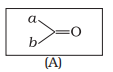
| a. | 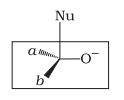 |
| b. | 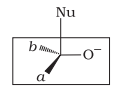 |
| c. | 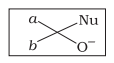 |
| d. | 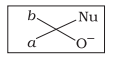 |
Choose the correct option
| 1. | (a, b) | 2. | (b, c) |
| 3. | (c, d) | 4. | (a, d) |
What mass of isobutylene is obtained from 37 g of tertiary butyl alcohol by heating with 20% H2SO4 at 363 K, if the yield is 65%?
1. 16 g
2. 18.2 g
3. 20 g
4. 22 g
The commercial name of polyacrylonitrile is.
(1) Dacron
(2) Orlon (acrilan)
(3) PVC
(4) Bakelite
Which of the following statements is not true about low-density polyethylene?
1. Tough
2. Hard
3. Poor conductor of electricity
4. Branched structure
Match the polymers given in Column I with their chemical names given in Column II.
| Column I | Column II |
| A. Nylon-6 | 1. Polyvinyl chloride |
| B. PVC | 2. Polyacrylonitrile |
| C. Acrilan | 3. Polycaprolactum |
| D. Natural rubber | 4. cis-polyisoprene |
Codes
| A | B | C | D | |
| 1. | 2 | 3 | 4 | 1 |
| 2. | 3 | 1 | 2 | 4 |
| 3. | 1 | 4 | 3 | 2 |
| 4. | 4 | 3 | 2 | 1 |
Match the polymers given in Column I with their repeating units given in Column II.
|
Column I |
Column II |
| A. Acrilan B. polystyrene C. Novolac D. Buna-N |
1. 3. |
Codes
A B C D
1. 2 3 4 1
2. 3 1 4 2
3. 1 4 3 2
4. 4 3 2 1
Select the correct option based on statements below:
| Assertion (A): | Polytetrafluoroethylene is used in making non-stick cookware. |
| Reason (R): | Fluorine has the highest electronegativity. |
| 1. | Both (A) and (R) are true but (R) is not the correct explanation of (A). |
| 2. | Both (A) and (R) are true and (R) is the correct explanation of (A). |
| 3. | Both (A) and (R) are false. |
| 4. | (A) is true but (R) is false. |
The most useful classification of drugs for medicinal chemistry is based on:
1. The basis of chemical structure.
2. The basis of drug action.
3. The basis of molecular targets.
4. The basis of the pharmacological effect.
Which of the following chemicals can be added for sweetening of food
items at cooking temperature and does not provide calories?
1. Sucrose
2. Glucose
3. Aspartame
4. Sucralose
Match the class of compounds given in Column I with their functions given in Column II.
| Column I | Column II |
| A. Antagonists | 1. Communicate messages between two neurons and that between neurons to muscles. |
| B. Agonists | 2. Bind to the receptor site and inhibit its natural function. |
| C. Chemical messenger | 3. Crucial to the body's communication process. |
| D. Receptors | 4. Mimic is the natural messenger. |
Codes
| A | B | C | D | |
| 1. | 2 | 4 | 1 | 3 |
| 2. | 3 | 1 | 4 | 2 |
| 3. | 1 | 4 | 3 | 2 |
| 4. | 4 | 3 | 2 | 1 |
Given below are two statements:
| Assertion (A): | Transparent soaps are made by dissolving soaps in ethanol. |
| Reason (R): | Ethanol makes things invisible. |
| 1. | Assertion and reason both are correct statements but reason does not explain assertion. |
| 2. | Assertion and reason both are correct and reason explains the assertion. |
| 3. | Both assertion and reason are wrong statements. |
| 4. | Assertion is the correct statement reason is the wrong statement. |
Given below are two statements:
| Assertion (A): | Preservative is added to food items. |
| Reason (R): | Preservatives inhibit the growth of microorganisms. |
| 1. | Assertion and reason both are correct statements but reason does not explain assertion. |
| 2. | Assertion and reason both are correct and reason explains the assertion. |
| 3. | Both assertion and reason are wrong statements. |
| 4. | Assertion is the correct statement reason is the wrong statement. |
In disaccharides, if the reducing groups of monosaccharides, i.e., aldehydic or ketonic groups are bonded, these are non-reducing sugars. Which of the following disaccharide is a non-reducing sugar?
| 1. |  |
| 2. |  |
| 3. |  |
| 4. |  |
DNA does not have:
1. Adenine
2. Thymine
3. Cytosine
4. Uracil
Match the following enzymes given in Column-I with the reactions they catalyze given in Column-II:
| Column-I (Enzymes) | Column-II (Reactions) | ||
| A. | Invertase | 1. | Decomposition of urea into NH3 and CO2 |
| B. | Maltase | 2. | Conversion of glucose into ethyl alcohol. |
| C. | Zymase | 3. | Hydrolysis of maltose into glucose. |
| D. | Urease | 4. | Hydrolysis of cane sugar. |
| Options: | A | B | C | D |
| 1. | 2 | 3 | 4 | 1 |
| 2. | 3 | 1 | 4 | 2 |
| 3. | 1 | 4 | 3 | 2 |
| 4. | 4 | 3 | 2 | 1 |
Which of the following polymers can have strong intermolecular forces?
(a) Nylon
(b) Polystyrene
(c) Rubber
(d) Polyesters
Choose the correct option
1. (a, d)
2. (a, c)
3. (a, b)
4. (b, c)
Of the following, which is the product formed when cyclohexanone undergoes aldol condensation followed by heating?
1.
2.
3.
4.
Phenol and benzoic acid can be distinguished by:
1. Aqueous NaHCO3
2. Aqueous NaNO3
3. Aqueous NaOH
4. Conc. H2SO4
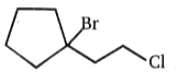
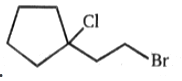
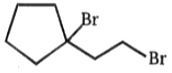
Major product is :-
1.
2.
3.
4.
The correct order of strengths of the carboxylic acids
1. I>II>III
2. II>III>I
3. III>II>I
4. II>I>III
Which of the following is the correct statement?
| 1. | Starch is a polymer of a-glucose. |
| 2. | Amylose is a component of cellulose. |
| 3. | Proteins are composed of only one type of amino acid. |
| 4. | In the cyclic structure of fructose, there are 6 carbons and one oxygen atom. |
The difference between amylose and amylopectin is
1. Amylopectin have - linkage and - linkage
2. Amylose have - linkage and - linkage
3. Amylopectin have - linkage and - linkage
4. Amylose is made up of glucose and galactose
Select the correct option based on statements below:
| Assertion (A): | Aldehydes and ketones both react with Tollen’s reagent to form a silver mirror. |
| Reason (R): | Both aldehydes and ketones contain a carbonyl group. |
| 1. | Both (A) and (R) are true and (R) is the correct explanation of (A). |
| 2. | Both (A) and (R) are true but (R) is not the correct explanation of (A). |
| 3. | (A) is true but (R) is false. |
| 4. | (A) is false but (R) is true. |


RCOOH RCH2OH. This mode of reduction of an acid to alcohol can be affected only by:
1. Zn/HCl
2. Na-alcohol
3. aluminium isopropoxide and isopropyl alcohol
4. LiAlH4
Molecules whose mirror image is non-superimposable over them are known as chiral. Which of the following molecules is chiral in nature?
1. 2 -Bromobutane
2. 1-Bromobutane
3. 2-Bromopropane
4. 2-Bromopropan-2-ol
Which is not an alcohol?
1. CH2=CHCH2OH 2. CH2OHCH2OH
3. C6H5CH2OH 4. C6H5OH
An organic compound (A) (MF C4H10O) upon dehydrogenation gives a compound (B) which forms phenyl hydrazone with phenylhydrazine and both the compounds (A) and (B) respond to iodoform test. Hence, the compound (A) is

| 1. |  |
2. |  |
| 3. |  |
4. |  |
Given below are two statements:
| Assertion (A): | Ortho and para nitrophenols are more acidic than phenol. |
| Reason (R): | Phenoxide ion formed by ortho and para nitrophenols are more stable than pehenoxide ion formed by phenol. |
| 1. | Both (A) and (R) are True and (R) is the correct explanation of (A). |
| 2. | Both (A) and (R) are True but (R) is not the correct explanation of (A). |
| 3. | (A) is True but (R) is False. |
| 4. | (A) is False but (R) is True. |
(CH3)3C-O-C2H5+ HI→ A + B
1. (CH3)3C-OH; CH3CH2I
2. (CH3)3C-I; CH3CH2I
3. (CH3)3C-I; CH3CH2OH
4. None of the above
| I: | The product of the reaction of phenol with bromine depends on the nature of the solvent. |
| II: | The reaction of phenol with bromine in CHCl3 gives a monosubstituted bromo derivative whereas the reaction of phenol with bromine water yields a trisubstituted bromo derivative of phenol. |
| 1. | I is correct and II is incorrect |
| 2. | I is incorrect and II is correct |
| 3. | Both I and II are correct |
| 4. | Both I and II are incorrect |
Select the correct option based on statements below:
| Assertion (A): | The α -hydrogen atom in carbonyl compounds is less acidic. |
| Reason (R): | The anion formed after the loss of the α -hydrogen atom is resonance stabilized. |
| 1. | Both (A) and (R) are True and (R) is the correct explanation of (A). |
| 2. | Both (A) and (R) are True but (R) is not the correct explanation of (A). |
| 3. | (A) is True but (R) is False. |
| 4. | (A) is False but (R) is True. |
Consider the following reaction scheme, and find out the final product (D):

| 1. |  |
2. |  |
| 3. |  |
4. |  |
The major end product of the following reaction sequence will be:

| 1. |  |
| 2. |  |
| 3. |  |
| 4. |  |
Xylene on oxidation with acidic gives:
1. Phthalic acid
2. Isophthalic acid
3. Terephthalic acid
4. All of the above
Select the correct option based on statements below:
| Assertion (A): | The IUPAC name of the compound is 2-ethoxy-2-methylethane. is 2-ethoxy-2-methylethane. |
| Reason (R): | In IUPAC nomenclature, ether is regarded as a hydrocarbon derivative in which a hydrogen atom is replaced by —OR or -OAr group [where, R = alkyl group and Ar = aryl group]. |
| 1. | Both (A) and (R) are True and (R) is the correct explanation of (A). |
| 2. | Both (A) and (R) are True but (R) is not the correct explanation of (A). |
| 3. | (A) is True but (R) is False. |
| 4. | (A) is False but (R) is True. |
Benzylamine may be alkylated as shown in the following equation?
Which of the following alkyl halides is best suited for this reaction through SN1 mechanism?
Consider the reactions,
(i) CH3CH2CH2NH2+HCl→ A
(ii) (C2H5)3N+HCl→ B
Products A and B are respectively:
1. CH3CH2CH2NHCl ; (C2H5)3NCl
2. CH3CH2CH2Cl ; (C2H5)3NCl
3. CH3CH2CH2NH3+ ; (C2H5)3NH+
4. None of the above
In the following reaction sequence, X and Y are:

| 1. |  |
| 2. |  |
| 3. |  |
| 4. |  |
Select the correct option based on statements below:
| Assertion (A): | Boiling points of alcohols and ethers are high. |
| Reason (R): | They can form intermolecular hydrogen bonding. |
| 1. | Both (A) and (R) are true and (R) is the correct explanation of (A). |
| 2. | Both (A) and (R) are true but (R) is not the correct explanation of (A). |
| 3. | (A) is true but (R) is false. |
| 4. | Both (A) and (R) are false. |

Hence, the value of ‘X’ is
1. 4
2. 3
3. 2
4. 1
Which one of the following is most reactive towards electrophilic reagent?
1.
2.
3.
4.
The order of reactivity of the following Compounds in electrophilic monochlorination at the most favourable position is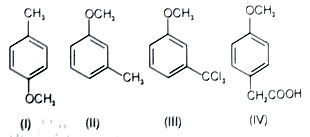
1. I < II < IV < III
2. III < IV < I < II
3. IV < III < II < I
4. III < II < IV < I
Which of the following species are involved in the carbylamine test?
a. R—NC
b. CHCl3
c. COCl2
d. NaNO2 + HCl
Choose the correct option
1. (a, b)
2. (b, c)
3. (c, d)
4. (a, d)
Which of the following reagents can be used to convert benzene diazonium chloride to benzene?
a. SnCl2 / HCI
b. CH3CH2OH
c. H3PO2
d. LiAlH4
Choose the correct option:
1. (a, b)
2. (b, c)
3. (c, d)
4. (a, d)


Choose the correct option
Which arenium ion is involved in the bromination of aniline?
.

Choose the correct option
1. (a, b, c)
2. (b, c, d)
3. (a, c, d)
4. (a, b, d)
Which of the following amines can be prepared by Gabriel synthesis?
a. Isobutyl amine
b. 2-Phenylethylamine
c. N-Methylbenzylamine
d. Aniline
Choose the correct option:
1. (a, b)
2. (b, c)
3. (c, d)
4. (a, d)
Which of the following reactions is/are correct?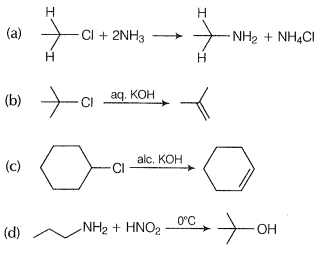
Choose the correct option
1. (a, b)
2. (b, c)
3. (c, d)
4. (a, c)
Under which of the following reaction conditions, aniline gives p-nitro derivative as the major product?
| a. | Acetyl chloride/pyridine followed by reaction with conc. H2SO4 + conc.HNO3 |
| b. | Acetic anhydride/pyridine followed by conc. H2SO4 + conc. HNO3 |
| c. | Dil. HCI followed by reaction with conc. H2SO4 + conc. HNO3 |
| d. | Reaction with conc. HNO3 + conc. H2SO4 |
Choose the correct option
1. (a, b)
2. (b, c)
3. (c, d)
4. (a, d)
Which of the following reactions belong to electrophilic aromatic substitution?
(a) Bromination of acetanilide
(b) Coupling reaction of aryldiazonium salts
(c) Diazotisation of aniline
(d) Acylation of aniline
Choose the correct option:
1. (a, b)
2. (b, c)
3. (c, d)
4. (a, d)


| A | B | |
| 1. |  |
 |
| 2. |  |
 |
| 3. |  |
 |
| 4. |  |
 |
A primary alkyl halide would prefer to undergo: